
Why is Pittsburgh’s Black population declining?
STORYBOARD
A study of demographic shifts in Allegheny County
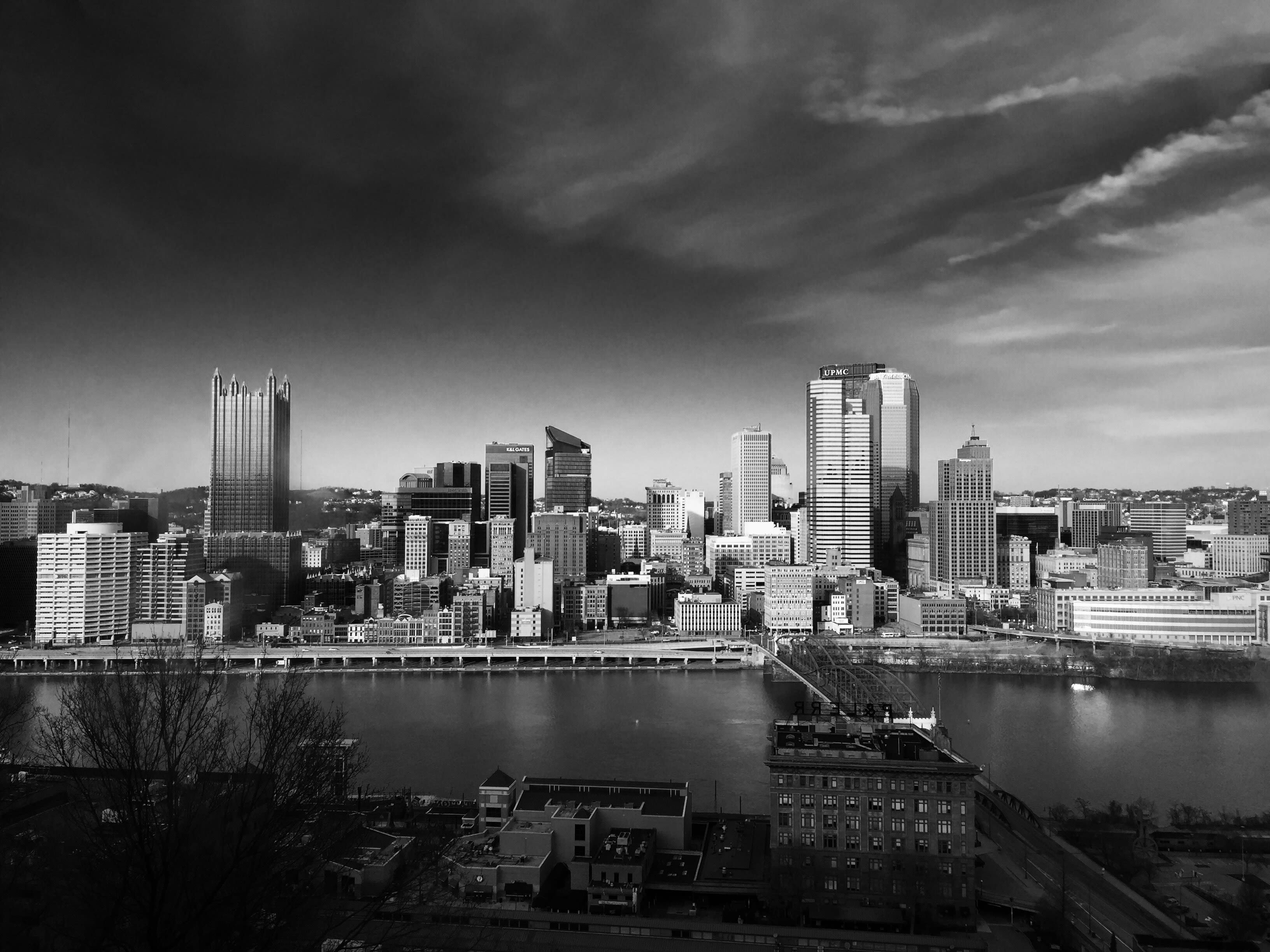

The city of Pittsburgh shed only 0.9% of its population from 2010 to 2020, the smallest population decline since 1960.
But even though Pittsburgh was able to broadly stabilize its population over the last 10 years, the Black population of Pittsburgh declined more than 13%. That is more than 15x the overall rate of Pittsburgh's population decline.
To turn things around and start growing the city again, the Pittsburgh government needs to understand why Black Pittsburghers are leaving the city for the surrounding municipalities, and how to grow and retain its Black population.
Pittsburgh’s Black population is declining 15x faster than the overall population


Where are Black Pittsburghers Moving?
While we don’t know the destination of every Black Pittsburgher who has left the City of Pittsburgh, the relative growth of the county’s Black populations suggests that while many Black Pittsburghers left the city limits, they chose to stay in the Metropolitan area.
[Insert text about anecdotal evidence and stories about outmigration to the municipalities in Allegheny county. ]
[Economists and demographers are not sure what is causing this shift.]

What is causing this outmigration?
Gentrification
One of the theories of why Black Pittsburghers are migrating out of the City is that they are being pushed out due to rising living costs.
[Perhaps include a quote from report/news story]
This is just one dataset to explore the "pushing out" theory. Rental housing costs would be a better way to represent displacement risk. Unfortunately, I was unable to find an accurate dataset of average rental costs in each municipality. Other datasets that could be explored include property tax rates in each municipality.
Searching for Opportunity
Another theory of why Black Pittsburghers are migrating out of the City is that they are leaving for better opportunities. School quality is an example of opportunity. [explain Alderdice based on number of students and lower numbers are better]
This is just one dataset to explore the theory that Black Pittsburghers are "Searching for Opportunity." Other datasets that could be explored include crime rates and high school graduation rates.
Probably a Combination of Both
[Insert text about how from this rudimentary analysis it looks like gentrification is the primary driver of outmigration. Further analysis is DEFINITELY REQUIRED.]
Why should the City of Pittsburgh care?
Regardless of the cause, this demographic shift is concerning for the City of Pittsburgh for many reasons.
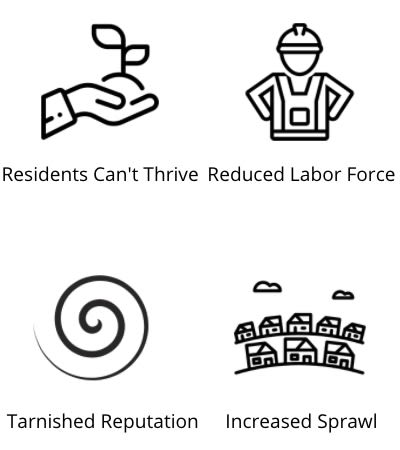
Residents Can't Thrive
[insert text describing]
Reduced Labor Pool
Employers are already facing historic difficulty hiring, and losing working-age folks will only exacerbate that. A sufficient and diverse talent pool is also important for attracting new employers to the region.
Tarnished Reputation
It is hard to stop the bleed. As Brookings Fellow and Pittsburgh native Andre Perry noted, “You don’t just lose talent. You lose a mindset… It really hurts the city more than just the loss of a person,” (Pittsburgh City Paper, 2021). If the City doesn’t address the outflow now, then it may well spiral out of control.
Increased Sprawl
Suburban migration encourages automobile-oriented culture and urban sprawl, and an increased reliance on cars increases greenhouse gas emissions. Also, when amenities and people are located far away from each other, the regional infrastructure burden and costs increase.

How can I help?
1. Contact the City of Pittsburgh Office of Equity
[insert text about contacting City of Pittsburgh Office of Equity to voice your support for racial equity programs and ask how you can help]
2. Support Inclusionary Zoning Legislation
As described above, housing costs might be pushing Pittsburghers out of the City limits. One way to limit displacement is through inclusionary zoning ordinances. With the proposed inclusionary zoning ordinances, new real estate developments will be required to make 10% of the units affordable. Inclusionary zoning is not the answer to the outmigration of Black residents but could help to prevent housing-cost-related displacement.
[text about submitting a public comment for inclusionary zoning ordinance]
References
 Built with Shorthand