
MIDDLE-INCOME TRAP, THAILAND
“Despite being a world-renowned tourist destination,
Thailand remains trapped in a middle-income country.”
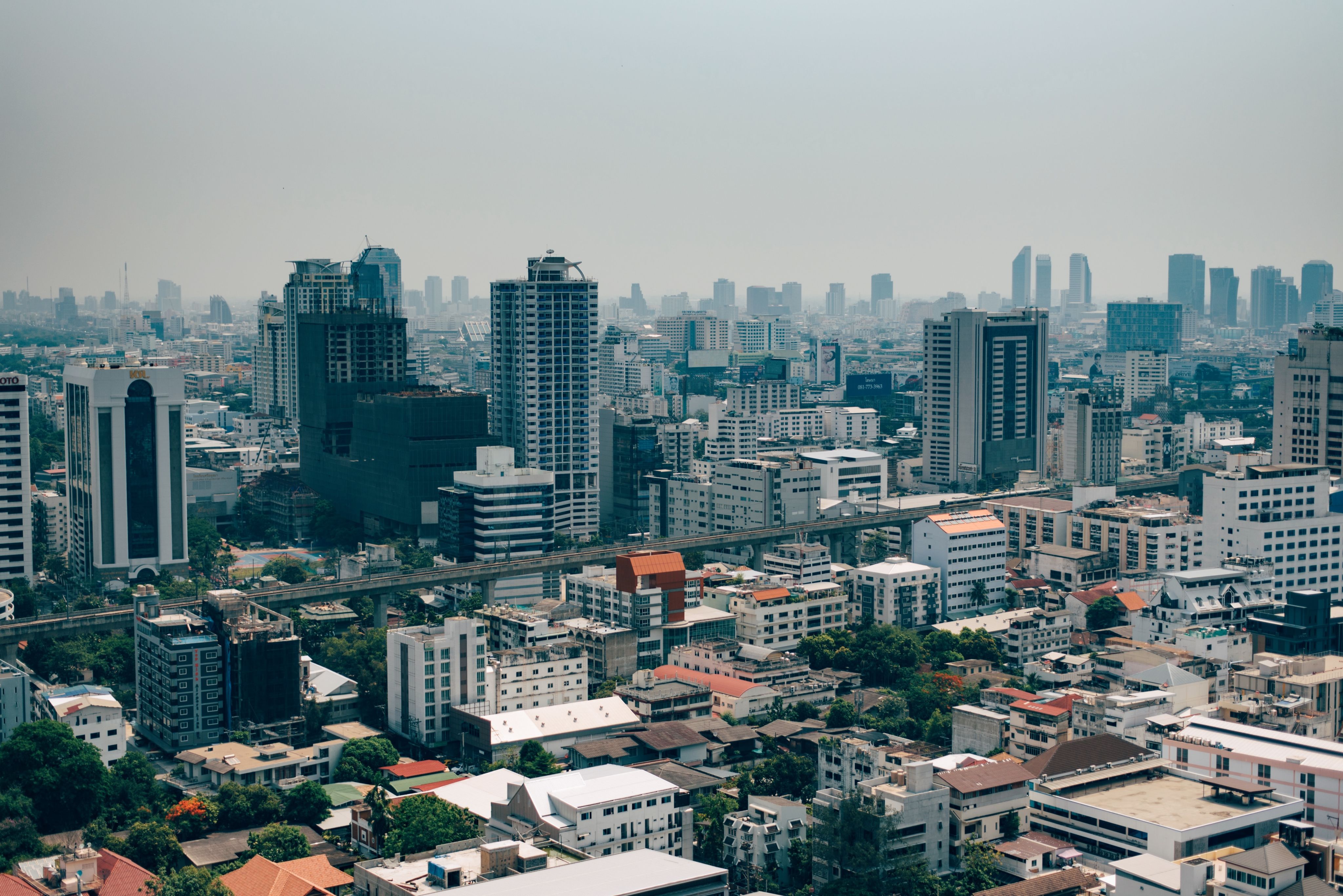

WORLD TOP TOURIST DESTINATION COUNTRY
Once I decided to move to Thailand, it changed all my life and my personality.
- Jasmine Jazz -


THAILAND, WORLD'S TOP TOURIST
DESTINATION COUNTRY
Thailand is a top destination for tourists, attracting millions of visitors each year with its rich culture, stunning beaches, and unique attractions. According to the United Nations World Tourism Organization (UNWTO), Thailand was ranked as the world's 5th most popular tourist destination, with approximately 40 million international tourist arrivals in 2019.1
CONTRIBUTION TO THE ECONOMY
The Thai tourism industry has been a significant contributor to the country's economic development. According to the UNWTO, Thailand was ranked 4th globally in International Tourism Receipts in 2019, with a total of USD 59.8 billion in earnings. This figure reflects the strong performance of Thailand's tourism industry, which has been a primary driver of economic growth of the country.2


Photo by Denys Nevozhai on Unsplash
Photo by Denys Nevozhai on Unsplash


Photo by Rachael Annabelle on Unsplash
Photo by Rachael Annabelle on Unsplash
THAI ECONOMY


.
Over decades, Thailand was ranked as a
“middle-income” economy with a historical
3.3% growth rate.
.
If the economy continues to grow at this rate,
It will take Thailand
more than 20 years
to elevate itself to high-income status.

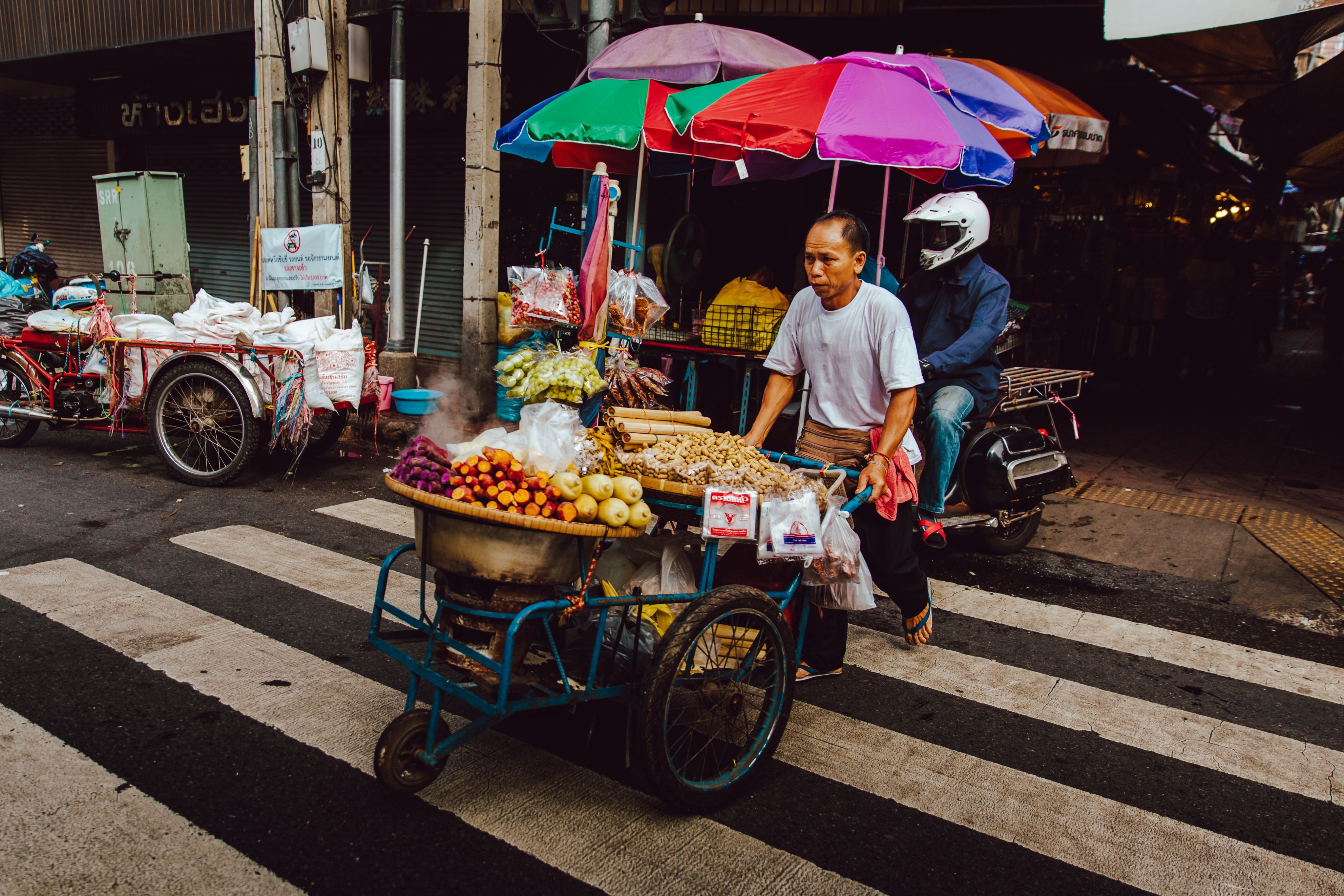
The Popularity of Tourism Contributes to Only 6.9% of Total GDP, 2019
While tourism is a major industry in Thailand, contributing significantly to the country's economy, it is important to note that tourism is not the sole driver of economic growth.
In fact, according to Thailand Open Government Data, tourism's direct contribution to Thailand's GDP was only 6.9% While tourism has the potential to drive economic growth, it cannot be relied upon as the sole source of economic prosperity. It is important to recognize that a diversified economy is essential for sustained growth and development. Other sectors, such as manufacturing, agriculture, and services, must also be developed and supported to create a strong and sustainable economy.4
x
The Illusion of Job Creation in Thailand's Tourism Industry
Based on the 2019 statistics provided by World Travel and Tourism Council (WTTC), the tourism industry in Thailand has contributed to 8.19 million jobs in the country. As a result, the Thai government has focused its policy and efforts towards the promotion and development of the tourism sector.5
However, it is worth noting that the number of jobs created by the tourism industry only accounts for 15.7% of the country's total employment, which is a relatively small proportion of Thailand's overall employment.
x
Challenges for Thailand's Economic Competitiveness in the Southeast Asian Region
The low GDP per capita of Thailand compared to its Southeast Asian peers is a cause for concern regarding the country's competitiveness within the developing nations in the region.
A low GDP per capita indicates that Thailand has fewer resources and less purchasing power than its peers, which could lead to difficulties in attracting foreign investment, retaining talented workers, and remaining competitive in international trade.
Therefore, it is crucial for Thailand to tackle the underlying causes of its low GDP per capita in order to improve its economic competitiveness and achieve sustained economic growth.
Middle Income Trap
“Thai labor costs are not cheap and we are trapped in a middle-income sandwich”
Bonggot Anuroj,
Deputy Secretary General at The Board of Investment of Thailand 6
In the past 10 years, Thailand's annual growth rate has slowed down to around 2-3% per year. We are falling into the middle-income trap where the country has been able to achieve middle-income status but struggles to sustain its economic growth and advance to high-income status due to rising costs and declining competitiveness.
According to the Asian Development Bank, The middle-income trap will yield slow growth, stagnant or falling wages, and a growing informal economy. Meaning that the country can no longer compete internationally in standardized. It also cannot compete in higher value-added activities on a broad enough scale because productivity is relatively too low. 7



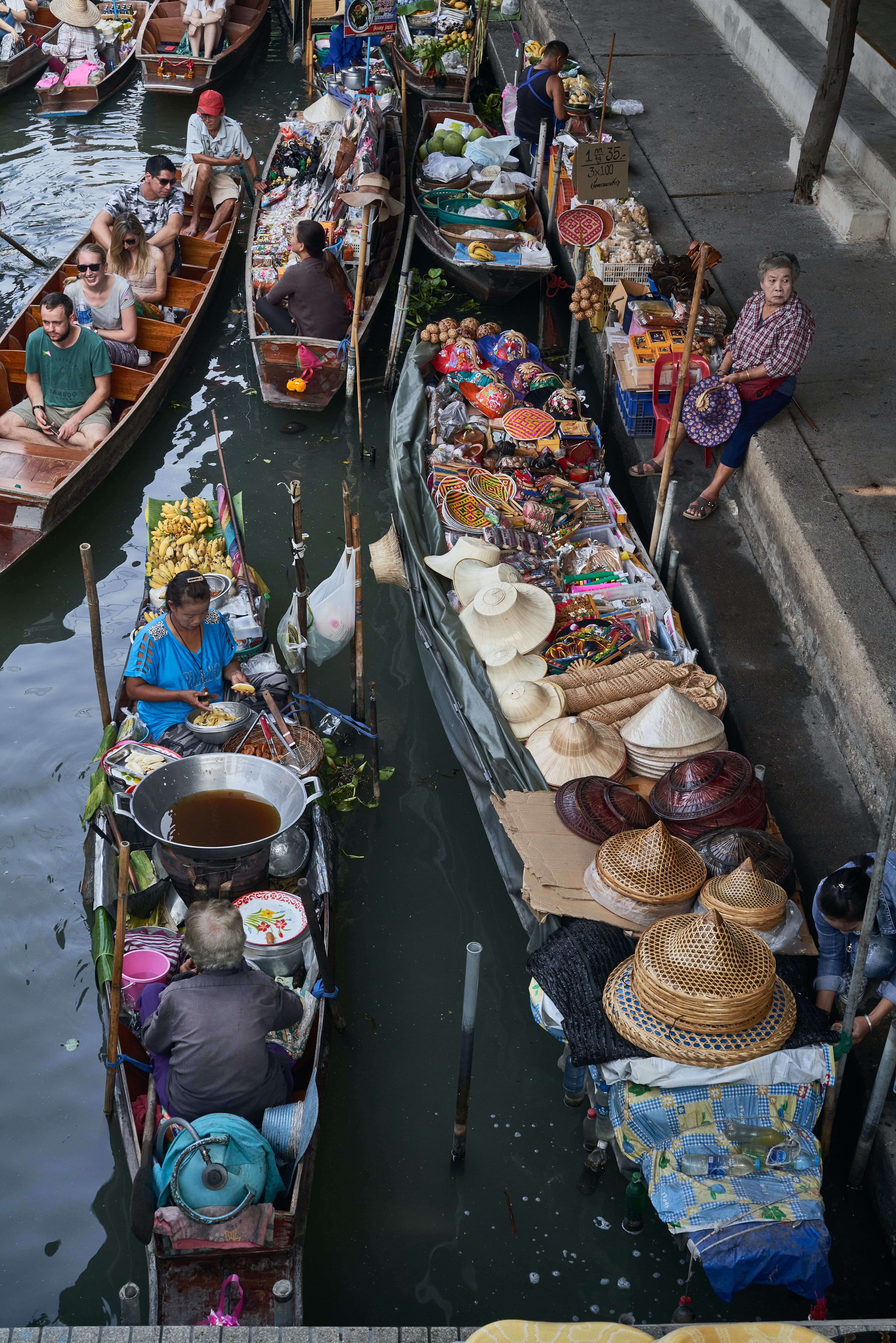
Thailand's Economic Growth Paradox: Increased GDP Per Capita but Low and Stagnant Household Income
Thailand's GDP per capita has increased while the average household income remains low and stagnant since 1990.8
The reliance on low-wage labor to drive economic growth leads to a situation where the GDP grows rapidly but the median income remains stagnant or increases slowly. As a result, the country becomes less competitive in the global market and struggles to attract high-value industries and investments.
Thailand's Low Average Household Income Compared to Other Middle-Income Countries.
Compared to average middle-income countries classified by World Bank 9, Thailand has a much lower average household income.
According to the Bank of Thailand statistic report, the average monthly household income in Thailand was approximately $465/month, which is significantly lower than the average household income in other middle-income countries in 2021 which has $6,000/month.
TACKLE MIDDLE-INCOME TRAP


"Many countries have successfully achieved middle-income status using more typical industrial policy tools like subsidies, but they don’t make enough effort to create policies promoting knowledge and innovation to move up to the high-income country."
Maximiliano Mendez-Parra,
International Economic Development Group10
Key Factors to Overcome
Middle-Income Trap


To make a transition to middle-income status,
Thailand needs "Innovation-led Economic Transformation"
Evidence from economic catch-up successes shows that investment in research and development (R&D) and labor productivity are essential key drivers.11 Hence, to achieve high-income status, it is crucial for Thailand to implement policies that focus on innovation to create new products and processes as well as high-quality skill training to achieve sustained economic growth.
Research & Development
The Global Entrepreneurship Monitor points out Thailand’s modest performance, compared with other countries at similar levels of development in the region, is partly due to its weakness in its innovation system.12
The R&D expenditure/GDP ratio in Thailand in 2019 is only 1.14% which is lower than that of the most advanced countries in the region, especially when compared with South Korea which has successfully escaped from the middle-income trap and continues right up to high-income status.
x
The Human Development
Thailand's Human Development Index lags behind high-income countries in East Asia, such as Hong Kong, Japan, and South Korea.13
The low levels of human development can limit Thailand's ability to innovate and improve its economic structure, which is necessary for sustained economic growth.
This indicates that Thailand urgently needs improvement in human capital and skills which are essential for escaping the middle-income trap.
x
x
Policy Recommendations
for Thai Government Agencies


- Innovation-led Economic Reforms Policy Recommendation -
Thailand currently lacks sufficient financial and human resources to support broad-based growth and enable innovation-led economic development. To spur innovation, it is important for the government to provide stabilization and prudent policies, such as ensuring adequate loans to support the investment, including skills training to enhance employability and labor productivity.
UNCTAD, 2015 14.

Photo by Alexander Mils on Unsplash
Photo by Alexander Mils on Unsplash
Innovation Financing Policy
Financing innovation enables firms to invest in new ideas, products, and processes that can enhance productivity and increase the competitiveness of the country (ECB, 2017).15 Central banks can provide funding to support innovation through a variety of mechanisms as below:
1. Providing low-interest loans
2. Offering grants or subsidies
3. Creating financing programs tailored to support innovation.

Photo by Artem Beliaikin on Unsplash
Photo by Artem Beliaikin on Unsplash
Labor Market Reforms
The development of skills, together with enhancing innovation, can contribute to structural transformation and economic growth. By implementing labor market reforms, such as increasing access to training and education, governments can help to ensure that workers are equipped with the skills and knowledge needed to succeed in the new economy (World Bank, 2021). 16


REFERENCE
1 “World Tourism Organization.” Global and regional tourism performance. Accessed February 28, 2023. https://www.unwto.org/tourism-data/global-and-regional-tourism-performance.
2 “World Tourism Organization.” Global and regional tourism performance. Accessed February 28, 2023. https://www.unwto.org/tourism-data/global-and-regional-tourism-performance.
3 “Overview, Thailand.” World Bank. Accessed February 28, 2023. https://www.worldbank.org/en/country/thailand/overview#1.
4 “Open Government Data of Thailand.” imgHeader. Accessed February 28, 2023. https://data.go.th/dataset.
5 “Travel & Tourism Economic Impact: World Travel & Tourism Council (WTTC).” World Travel & Tourism Council. Accessed February 28, 2023. https://wttc.org/research/economic-impact.
6 “Can Thailand Escape the Middle-Income Trap?” Knowledge at Wharton. Accessed February 28, 2023. https://knowledge.wharton.upenn.edu/article/can-thailand-escape-middle-income-trap/.
7 Paus, Eva. “Escaping the Middle-Income Trap: Innovate or Perish.” Asian Development Bank. Asian Development Bank, March 3, 2017. https://www.adb.org/publications/escaping-middle-income-trap-innovate-or-perish.
8 “Thailand , World Bank Data.” Data. Accessed February 28, 2023. https://data.worldbank.org/country/TH.
9 “Middle Income Countries.” World Bank. Accessed February 28, 2023. https://www.worldbank.org/en/country/mic.
10 “How to Avoid the 'Middle-Income Trap'.” ODI. Accessed February 28, 2023. https://odi.org/en/insights/how-to-avoid-the-middle-income-trap/#:~:text=Most%20low%2Dincome%20countries%20.
11 Triki Taffere Tesfachew Jonathan Said Melat Tekaligne, Chema, Taffere Tesfachew Governance Advisor, Jonathan Said Head of Inclusive Growth and Private-Sector Development Practice, and Melat Tekaligne Advisor. “How Can African Countries Avoid the Middle-Income Trap?” Institute for Global Change. Accessed February 28, 2023. https://institute.global/advisory/how-can-african-countries-avoid-middle-income-trap.
12 “Policy Brief, Thailand.” GEM Global Entrepreneurship Monitor. Accessed February 28, 2023. https://www.gemconsortium.org/economy-profiles/thailand-2.
13 Benjamin, Daniel, Kristen Cooper, Ori Heffetz, and Miles Kimball. “Measuring the Essence of the Good Life.” IMF. Accessed February 28, 2023. https://www.imf.org/en/Publications/fandd/issues/2021/12/Measuring-Essence-Good-Life-Benjamin-Cooper-Heffetz-Kimball#:~:text=A%20major%20reason%20the%20HDI,in%20a%20reasonably%20comparable%20way.
14 “Thailand Needs to Innovate to Avoid 'Middle Income Trap'.” UNCTAD, September 17, 2015. https://unctad.org/news/thailand-needs-innovate-avoid-middle-income-trap.
15 “Working Paper Series - Financial Reforms and Innovation: a Micro-Macro Perspective.” European Central Bank. Accessed February 28, 2023. https://www.ecb.europa.eu/pub/pdf/scpwps/ecb.wp2544~004fc38090.en.pdf.
16 “Skills Development.” World Bank. Accessed February 28, 2023. https://www.worldbank.org/en/topic/skillsdevelopment.
17 “The Role and Impact of Infrastructure in Middle-Income Countries.” Asian Development Bank. Accessed February 28, 2023. https://www.adb.org/sites/default/files/publication/359136/ewp-518.pdf.
 Built with Shorthand