Lead Levels in Pittsburgh's Water
How the city has responded and why it still isn't enough.

Recent History of Lead in Pittsburgh's Water Lines
Lead enters drinking water when lead pipes carrying the water corrode and leach lead into the water supply. Under the Lead and Copper Rule, the Environmental Protection Agency (EPA) requires corrosion control treatment, where utilities add materials into the water to slow the corrosion process.[1]
In 2014, the Pittsburgh Water & Sewer Authority (PWSA) switched from adding soda ash to the drinking water to caustic soda, without notifying the Pennsylvania Department of Environmental Protection (DEP).[2] In 2016, the DEP found out about the change from soda ash to caustic soda and ordered the city to begin lead testing.[3]
The EPA’s Lead and Copper Rule establishes an action level of 15 ppb. If 10% of the homes tested have lead levels above the action level, the utility must take certain actions.[4] That same year, the City of Pittsburgh found lead levels of 22 parts per billion (ppb), which significantly exceeded the federal action level of 15 ppb. The city was ordered by the DEP to begin replacing 7% of pipes per year and implement a public awareness campaign.[5]
Since 2016, PWSA has exceeded its requirement of replacing 7% of lead pipes per year and has committed to replacing all public lead pipes in their service area by 2026.[6] In 2019, PWSA fell below the EPA action level of 15 ppb.[7]

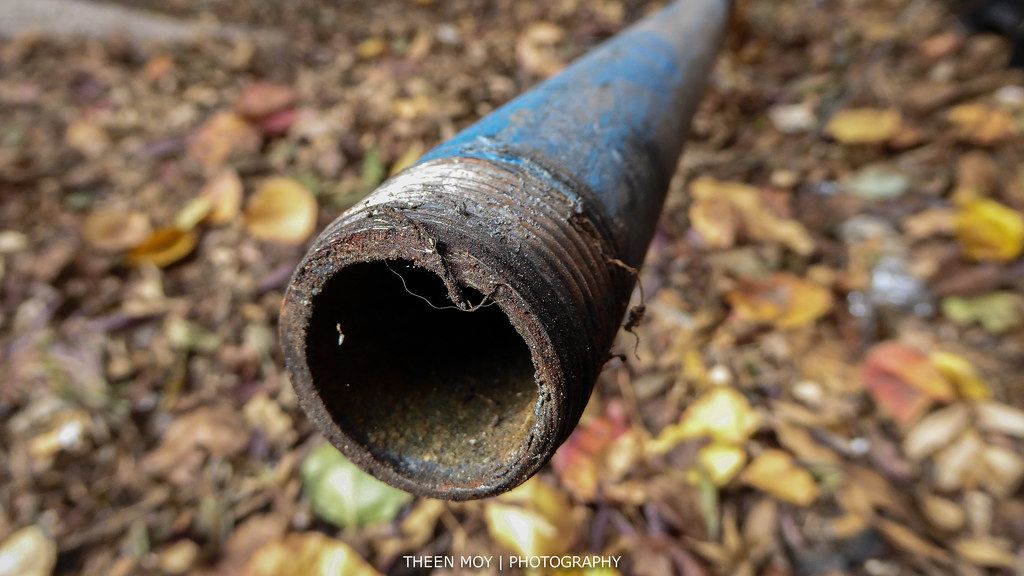
"Lead Pipe" by Theen ... is marked with CC BY-NC-SA 2.0.
"Lead Pipe" by Theen ... is marked with CC BY-NC-SA 2.0.
Any amount of lead in drinking water is dangerous.
While Pittsburgh may be pleased that they are below the EPA's lead action level, residents are still at risk.

However, the federal action level does not indicate the amount of lead that is safe in drinking water; the “EPA and Centers for Disease Control and Prevention (CDC) agree no amount of lead is safe in drinking water.”[8]
Lead levels are particularly dangerous to children since they are developing. The graph on the right indicates findings by the National Toxicology Program of adverse health effects with “sufficient” evidence at blood lead levels <5 µg/dL and <10 µg/dL.[9]
Allegheny County mandates blood lead level testing for children from 9-12 months old, starting in 2018.[10] In 2020, 6.02% of children living in the City of Pittsburgh School District who had their blood lead level tested had a blood lead level over 5 µg/dL.[11] These children could face health effects for the rest of their lives, such as “behavior and learning problems, lower IQ and hyperactivity, slowed growth, hearing problems, [and] anemia.” [12]
Pittsburgh has taken successful steps to decrease lead levels
But their response may not reach all residents.


Pittsburgh's Current Response and Shortcomings
PWSA currently offers lead testing kits to their customers. If lead is found in their testing kit, PWSA then provides a free lead filter for the home.[13]
To receive a lead testing kit, you must have a PWSA account number. However, many renters do not pay for their own water bills. This is because landlords may have difficulty splitting water meter costs among residents in the same building or may want to ensure that their pipes do not freeze in the winter.[14] Anecdotally, in both houses I have rented in Pittsburgh, I have not had a water bill come directly from PWSA, so I have had no PWSA account number to request a lead testing kit. Despite both properties having lead service lines, I have yet to receive a free water testing kit from PWSA. Without subsidy from PWSA, testing costs can cost anywhere between $20 and $100,[15] which may be cost-prohibitive to many households.
In the 2010 census, approximately 48% of housing units in the City of Pittsburgh were occupied by renters.[16]
What to Do to Protect Yourself from Lead in Drinking Water
Identify if your home has private and/or public lead service lines.
Run cold water for 30 seconds to flush out the lead that has leached into the waterline since the last time the faucet was used.[17]
Purchase a filter that removes lead from the water. Not all filters do,[18] including standard Brita filters.
See if plumbing fixtures in your home contain lead.
What to Do to Protect Your Neighbors from Lead in Drinking Water
Let PWSA Know They Should Change Their Lead Testing Program
Additional Sources
Color Palette: ColorBrewer 2.0 5 Class Blues
 Built with Shorthand