
Is The US Healthcare System Wasting Too Much Money?
A Re-Look On The Extent Of The Monetary Waste


Chapter 1:
Inspiration
Healthcare has always been a hot topic in the United States because patients and citizens can feel the burden of a under-performing healthcare system.


Photo by Vidar Nordli-Mathisen on Unsplash licensed under an Unsplash license
Photo by Vidar Nordli-Mathisen on Unsplash licensed under an Unsplash license

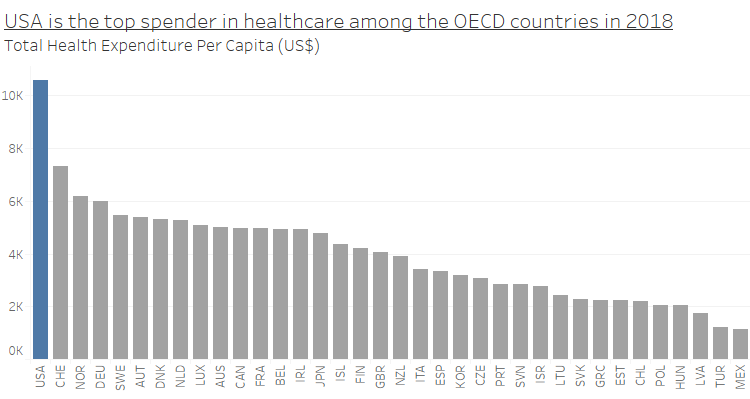
The US society as a whole (public and private) spends a lot on healthcare. However, the system does not translate the money into better health outcomes. Most OECD countries can use lesser amount of money to get more positive outcomes.

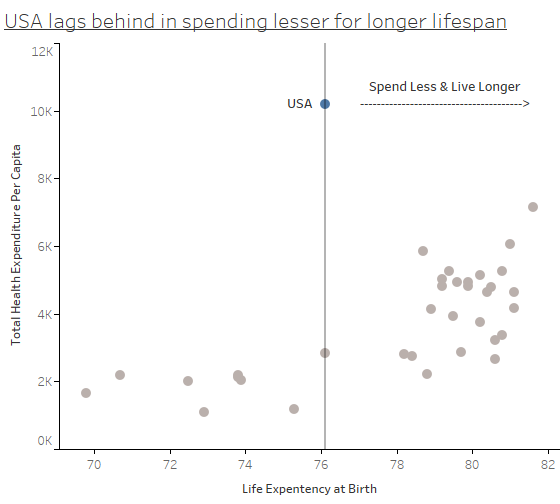
Source: 2017 OECD Data
Source: 2017 OECD Data

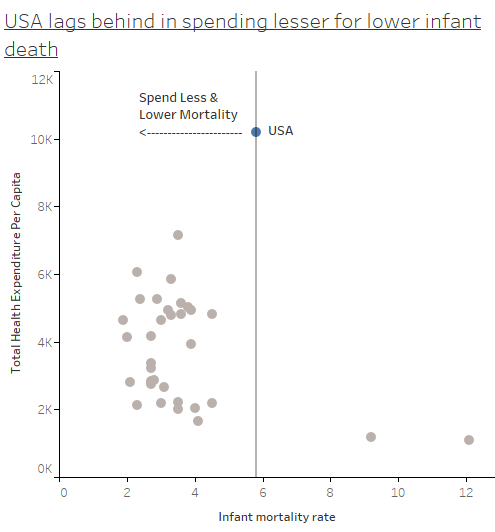
Source: 2017 OECD Data
Source: 2017 OECD Data
One part of the high healthcare spending is the amount of monetary waste that is not used to improve the health of the patients. Current debate on the healthcare spending waste seems to be trapped within the professional and academic circle. I find that the statistics on healthcare waste tend not to inspire follow-up actions. The statistics can sometimes be too abstract or too detached from everyday life for people to know the urgency of the issue.
Chapter 2:
What is the waste in healthcare spending?


According to the healthcare experts, Berwick and Hackbarth (2012), there are 6 categories of healthcare spending waste:
- Failure of care delivery: e.g. not using the best practices in medical science to provide care in the most cost-effective manner.
- Failure of care coordination: e.g. when different actors in the healthcare system do not communicate with each other, patients cannot receive the full treatment required, hence leading to even more hospital admissions.
- Over-treatment or low-value care: e.g. performing excessive medical procedures that does not improve health.
- Pricing Failure: e.g. paying too much for healthcare good and services.
- Fraud and Abuse
- Administrative Complexity: e.g. billing complexity requires additional administrative manpower who do not provide care.

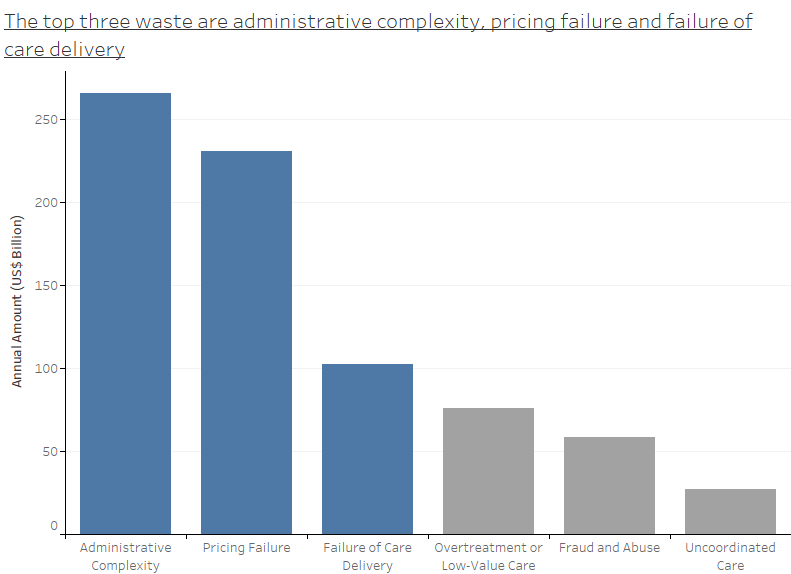
Source: Shrank, Rogstad and Parekh (2019); Based on lower estimates but the top catergories remains the same for upper estimates.
Source: Shrank, Rogstad and Parekh (2019); Based on lower estimates but the top catergories remains the same for upper estimates.
In 2019, a group of researchers from Humana Inc and University of Pittsburgh (Shrank, Rogstad and Parekh), published a paper detailing the amount of spending waste in the healthcare system. They searched the academic world for relevant spending waste estimates. They found that each category of waste costs billions of dollars every year. The total ranged from US$760 billion to US$935 billion which is 20% to 24% of total health expenditure.

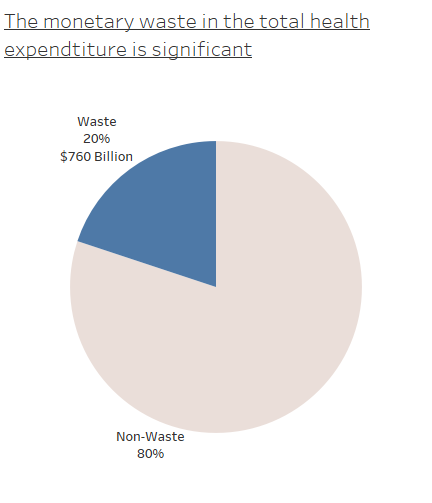
Source: Calculated using waste the expenditure estimates from Shrank, Rogstad and Parekh (2019); Based on lower estimates
Source: Calculated using waste the expenditure estimates from Shrank, Rogstad and Parekh (2019); Based on lower estimates
Chapter 3:
Why should we be concerned about the waste?


US$760 billion is definitely a big number and by itself it does not necessary mean that it is urgent to cut it down. USA has a trillion dollar economy. Surely, America can afford a few billion dollars?
How much is US$760 billion worth to an individual and the government?


Photo by Burst on Pexel licensed under an Pexel license
Photo by Burst on Pexel licensed under an Pexel license
If the money wasted was distributed to everyone in the US, everyone will receive US$2,300 to US$2,900.
This is equivalent to:

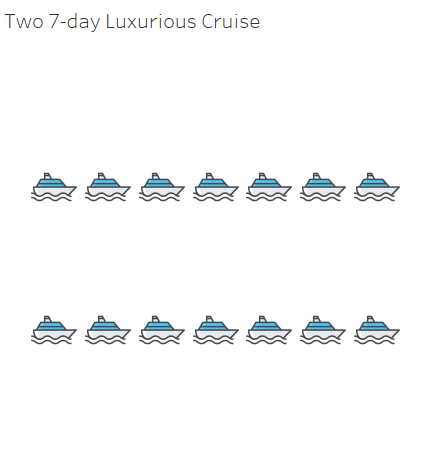
Source: Calculated using price estimates from CNBC
Source: Calculated using price estimates from CNBC
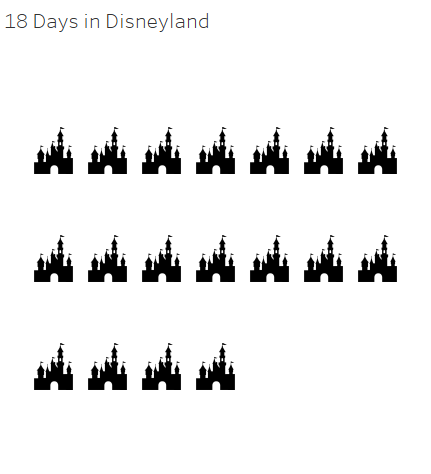
Source: Calculated using price estimates from CNBC
Source: Calculated using price estimates from CNBC

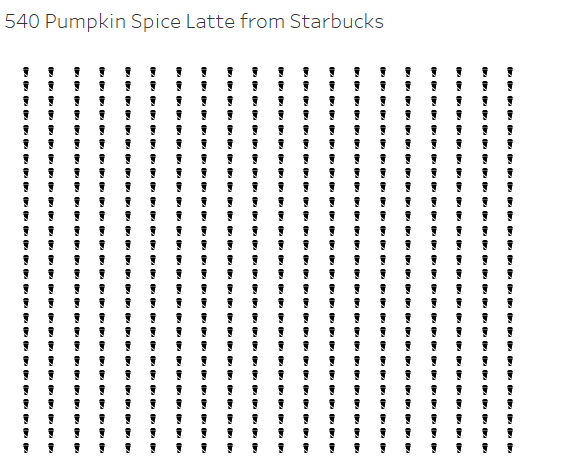
Source: Calculated using price estimates from CNBC
Source: Calculated using price estimates from CNBC
If the money wasted was given to the government, what other purpose could they use the money for?
Apparently, having the healthcare money wasted is more important then defending the country or investing in future generations.


Photo by Pixabay on Pexel licensed under an Pexel license
Photo by Pixabay on Pexel licensed under an Pexel license

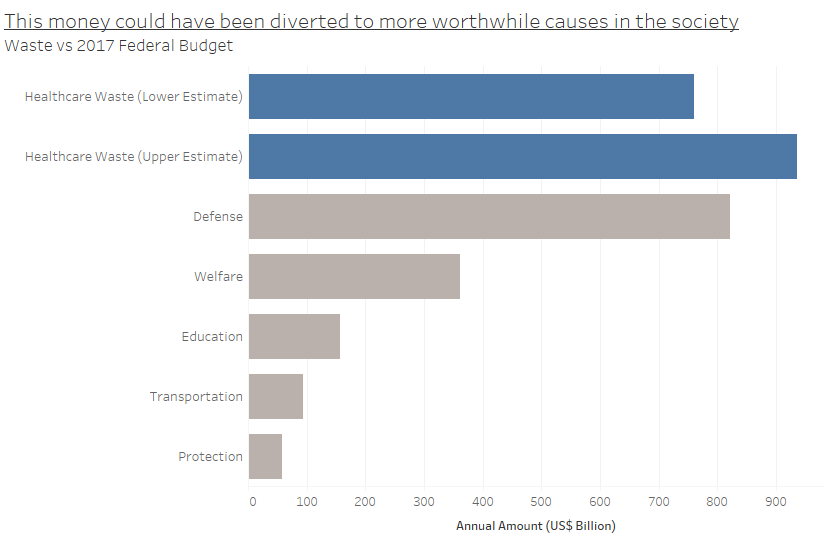
Source: Shrank, Rogstad and Parekh (2019), usgovernmentspending.com
Source: Shrank, Rogstad and Parekh (2019), usgovernmentspending.com
Chapter 4:
Can the waste be reduced?


Shrank, Rogstad and Parekh also collected estimates about existing solutions to the waste problem. It ranges from US$191 billion to US$282 billion.
Sadly, these solutions are still not enough to reduce most of the waste, especially when it comes to administrative complexity.
In fact, even if all waste are solved, America will still be the top spender in the world. This could mean that there might be other unknown waste that are currently unaccounted for.
While this may appear bleak, this can be seen as an opportunity for the American society to put their innovativeness to good use.

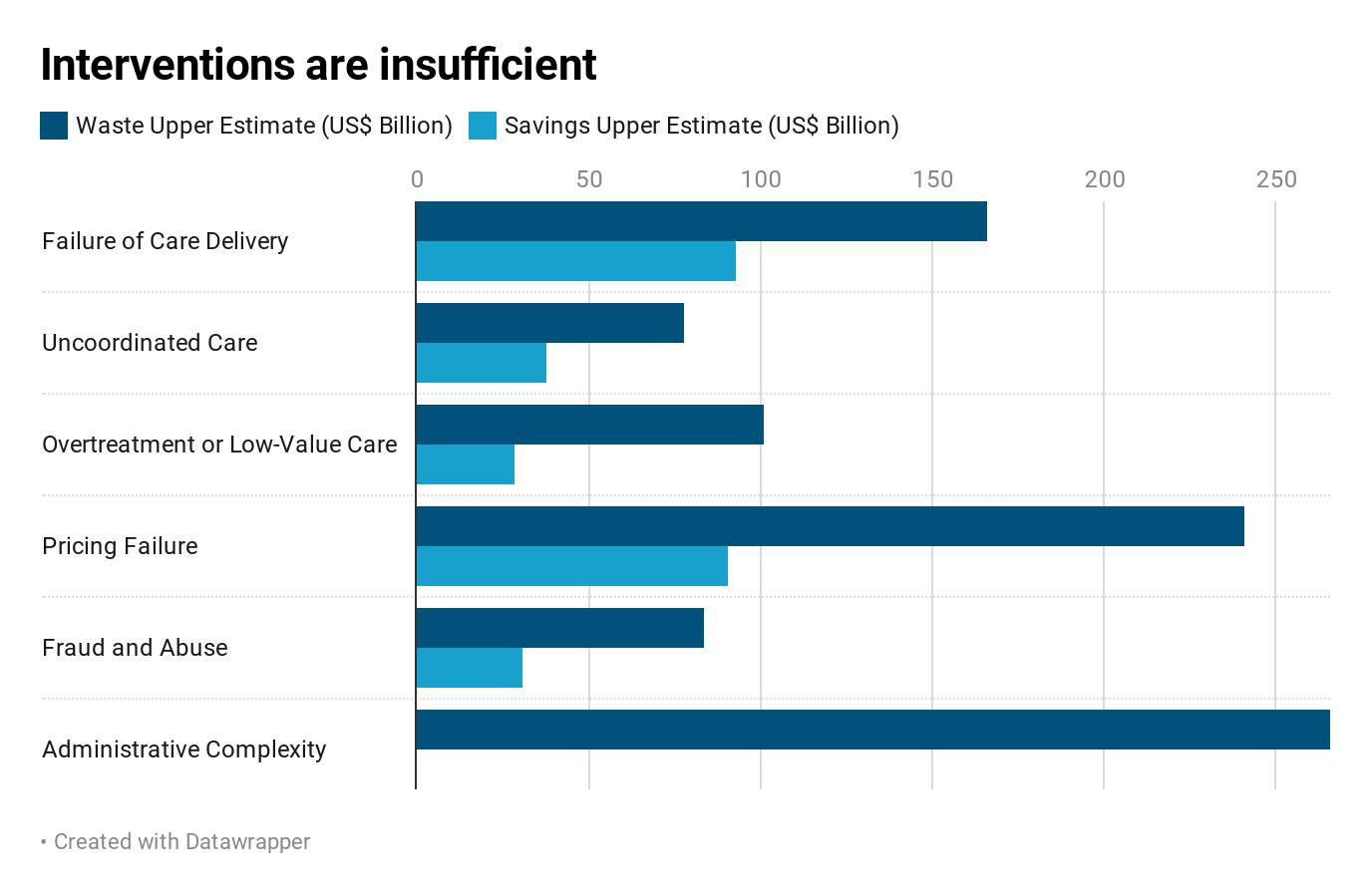
Source: Shrank, Rogstad and Parekh (2019)
Source: Shrank, Rogstad and Parekh (2019)

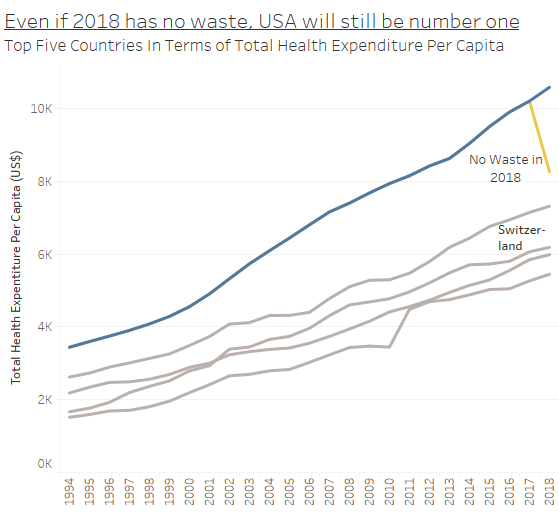
Source: Calculated using estimates from Shrank, Rogstad and Parekh (2019)
Source: Calculated using estimates from Shrank, Rogstad and Parekh (2019)
Final Chapter:
What to do next?


For every minute,
the US healthcare system is wasting


We can see that healthcare spending waste is already too big for the society to stomach. It is taking away precious resources which could be better utilized. If we did not intervene to stem the rise, it will be problematic for the society.


Photo by Aaron Kittredge from Pexels licensed under an Pexel license
Photo by Aaron Kittredge from Pexels licensed under an Pexel license
Action 1: Lobby the legislators to tackle a specific waste problem at all levels of government.
- We need to get the government to prioritize on solving the waste issue.
- Given that regulation of the healthcare industry is largely left to the private sector, there is room for the government to step in.
- USA.GOV provide a list of websites where you can search for the contact details of legislators and executive branch officials from the federal level to the local level.


Photo by Pixabay from Pexels licensed under an Pexel license
Photo by Pixabay from Pexels licensed under an Pexel license
Action 2: Start a business that can solve a particular waste in the healthcare industry.
- Given the insufficiency of existing solutions, there is a market need to tackle the waste issue.
- These waste will ultimately reduce the revenue that an insurance company or hospital makes.
- They will be willing to pay for a service that can help to boost their profits if the payment is lower than amount of waste.
References
“Government Spending Chart.” Government Spending Chart: United States 2006-2024 - Federal State Local Data. https://www.usgovernmentspending.com/spending_chart_2006_2024USb_19s1li111mcn_F0f40t20t
Berwick DM, Hackbarth AD. Eliminating Waste in US Health Care. JAMA. 2012;307(14):1513–1516. doi:https://doi.org/10.1001/jama.2012.362
Martin, Emmie. “6 Ways You Could Spend $1,000 Instead of on an IPhone X.” CNBC. CNBC, October 31, 2017. https://www.cnbc.com/2017/10/31/6-things-you-could-do-with-1000-instead-of-buying-an-iphone-x.html.
OECD (2019), Health spending (indicator). https://data.oecd.org/healthres/health-spending.htm
OECD (2019), Infant mortality rates (indicator). https://data.oecd.org/healthstat/infant-mortality-rates.htm#indicator-chart
OECD (2019), Life expectancy at birth (indicator). https://data.oecd.org/healthstat/life-expectancy-at-birth.htm#indicator-chart
Shrank WH, Rogstad TL, Parekh N. Waste in the US Health Care System: Estimated Costs and Potential for Savings. JAMA. 2019;322(15):1501–1509. doi:https://doi.org/10.1001/jama.2019.13978


Photo by EVG photos from Pexels licensed under an Pexel license
Photo by EVG photos from Pexels licensed under an Pexel license


Photo by Pixabay from Pexels licensed under an Pexel license
Photo by Pixabay from Pexels licensed under an Pexel license