Embrace the Outdoors
Your body will thank you!


1 in 5 Adults in the Northeast report spending 10 minutes or less outside per day*
Whether you believe Pittsburgh to be in the Northwest or the Midwest... The results are nearly identical.

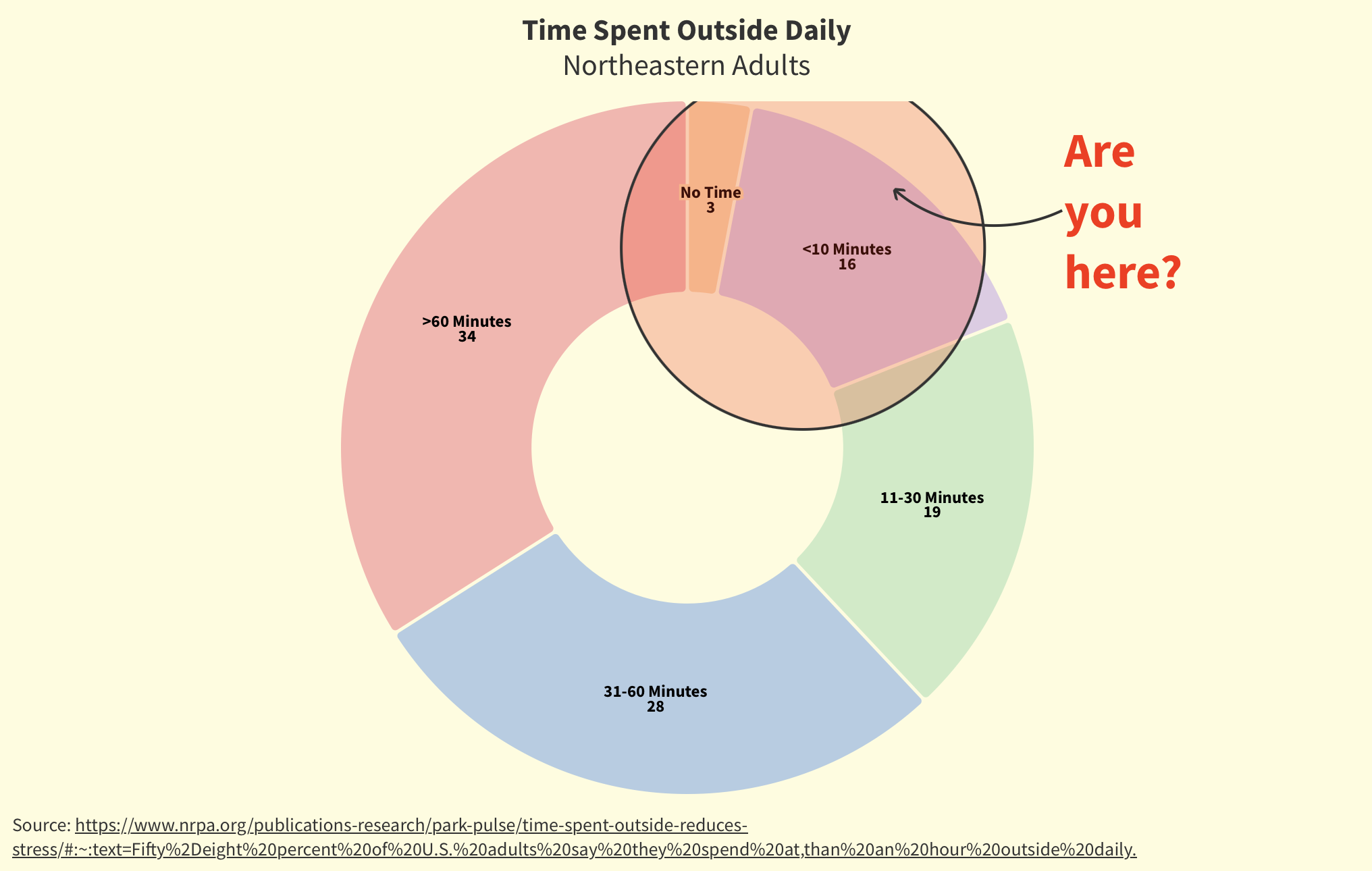
*https://www.nrpa.org/publications-research/park-pulse/time-spent-outside-reduces-stress/#:~:text=Fifty%2Deight%20percent%20of%20U.S.,than%20an%20hour%20outdoors%20daily


If you are....
The benefits of spending time outside are well-documented...
and plentiful...
A review of 39 independent studies on nature and health...
75% showed improved cognitive health
83% showed improved physical health.
98% showed improved mental health
*Source: What is the impact of nature on human health? A scoping review of the literature;
So it's good for you..
and you'll probably even enjoy it
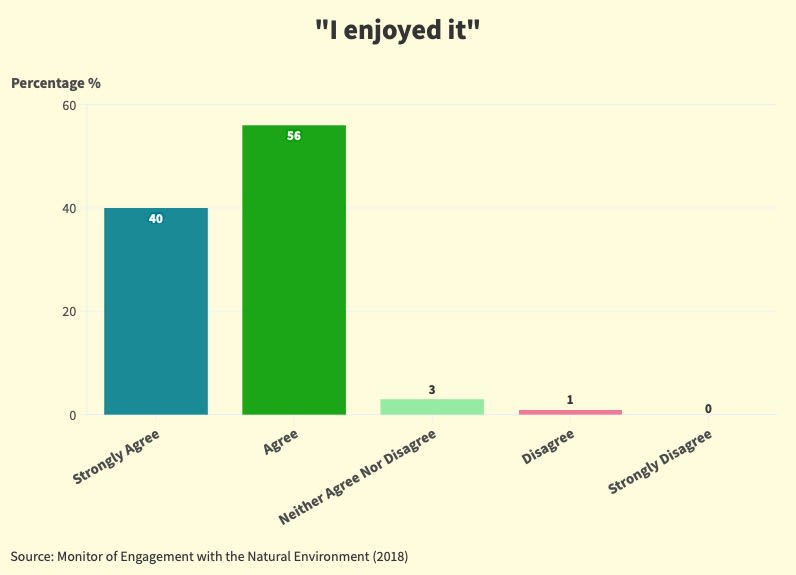
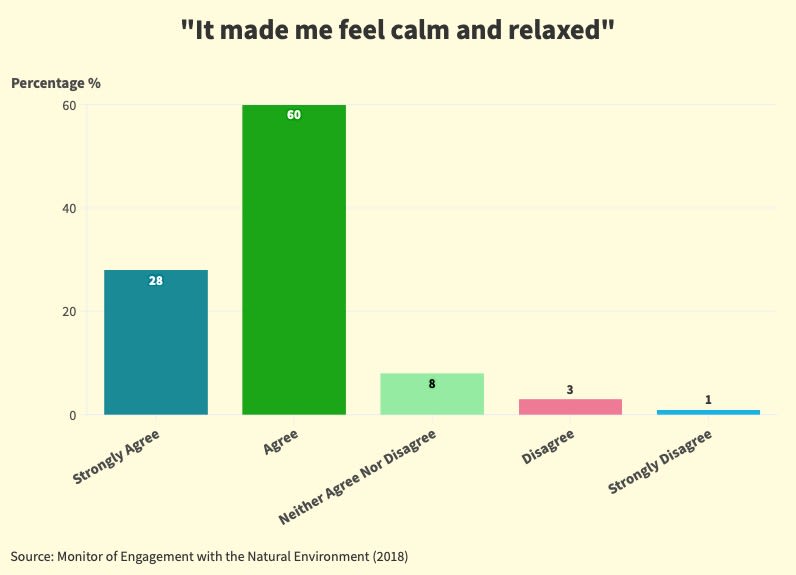
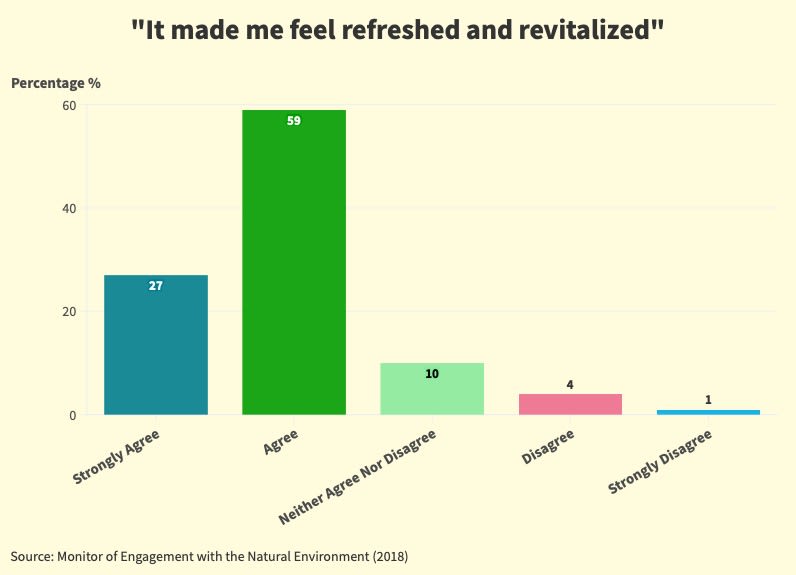
The Vast Majority Respond Positively to Nature
"Spending time in nature is linked to both cognitive benefits and improvements in mood, mental health and emotional well-being."
Studies have shown that not only does spending time in nature provide a host of physical and mental benefits, but also people tend to enjoy it as well. This particular study, performed by the Monitor of Engagement with the Natural Environment (U.K. based), examined how much time people spend in nature and collect survey results about that time annually. The overwhelming response in the survey is positive. While there are some people who respond negatively, the results are pretty clear: most people enjoy spending time outside.
People enjoy nature for several reasons. It's a break from our often stressful, everyday lives. Being in nature makes you feel grateful and connected to everything around you. Views, sounds, animals, plants, and fresh air all contribute to alleviating stress and relaxing your mind. You can go on hikes, swim in lakes or oceans, or just lounge in the sun. Nature ranges from your neighborhood park to vast oceans to never-ending dry deserts, and everything in between. And in most places, each place even changes with the seasons. Being in nature can lower stress, make you feel happier, and make you care more about our planet. It's not just about scenery, it's about the positive effects it has on you and the immense sense of gratitude it can instill in a person. Why not spend more time doing something that makes you feel like this and is good for you?

There's more...
"Published data indicate[s] that 80%–90% of vitamin D is obtained from sunlight"


so what is Vitamin D?
Cognitive Health
Muscle Strength
Heart Health
Calcium Regulation
Bone Strength+Health
Cancer Prevention
Mood Regulation
Autoimmune Health
Immune Support
Inflammation Response
These are a few of the known and studied functions of Vitamin D.
It is definitely important.
Functions from compiled from the following sources:
https://ods.od.nih.gov/factsheets/VitaminD-HealthProfessional
https://www.mayoclinic.org/drugs-supplements-vitamin-d/art-20363792
https://www.hsph.harvard.edu/nutritionsource/vitamin-d/
Vitamin D is essential for overall health.
This series of graphs shows the percentage decrease of developing certain diseases associated with varying levels of Vitamin D. (This does NOT mean Vitamin D directly prevents diseases, but rather adequate and optimal levels are associated with less cases of these conditions) The following graph are created from data from multiple different scientific studies analyzing these conditions and vitamin D levels.
Vitamin D is a fat-soluble vitamin found naturally in certain foods, added to others, and available as a dietary supplement. 1 Additionally, it can be synthesized in the body through the action of ultraviolet (UV) rays from sunlight on the skin. 1 The graph on the right shows the % decrease in diseases at different levels of Vitamin D. This is not causation. This is simply a correlation that may be due to several confounding variables. However, different diseases and conditions tend to occur more frequently in patients with lower levels of Vitamin D. Under 30 nmol/L of Vitamin D is considered to be deficient and is the baseline for comparisons amongst higher levels. 1
Vitamin D plays a role in calcium absorption in the gut, maintaining appropriate serum calcium and phosphate levels, and contributes to bone growth and repair, and helps in preventing osteoporosis.
Beyond providing support for many bone cell functions , Vitamin D has additional roles in the body, including reducing inflammation and influencing cell growth, neuromuscular and immune functions, and glucose metabolism. It controls genes involved in cell proliferation, differentiation and several other processes. 2
Across studies, different standards exist for evaluating deficiency levels. However, a general consensus seems to be measuring serum 25(OH)D concentrations at different thresholds.
The serum concentrations of 25(OH)D associated with deficiency, adequacy for bone health, or overall health have not been explicitly confirmed and potentially vary for different people.3 However, there have been many studies on Vitamin D levels and health outcomes, and expert committees have established varying guidelines, with some suggesting that levels above 30 nmol/L (12 ng/mL) are sufficient for most people, while others recommend levels exceeding 75 nmol/L (30 ng/mL) for clinical benefits, with caution regarding concentrations exceeding 150 nmol/L (50 ng/mL). 3 It is fairly easy to get enough Vitamin D naturally (10-15 minutes of direct sunlight a few times a week4) but it is important to note toxicity of too much Vitamin D can occur, most frequently from excessive supplementation.
1https://ods.od.nih.gov/factsheets/VitaminD-HealthProfessional/
2https://www.ncbi.nlm.nih.gov/pmc/articles/PMC6032242/
3https://ods.od.nih.gov/factsheets/VitaminD-HealthProfessional/
4https://www.health.harvard.edu/staying-healthy/time-for-more-vitamin-
*The graphs on the right were reproduced from a graph from https://vitamindwiki.com/Chart+of+Vitamin+D+levels+vs+disease+-+Grassroots+Health+June+2013. The data itself comes from multiple different studies, that are listed on the page.
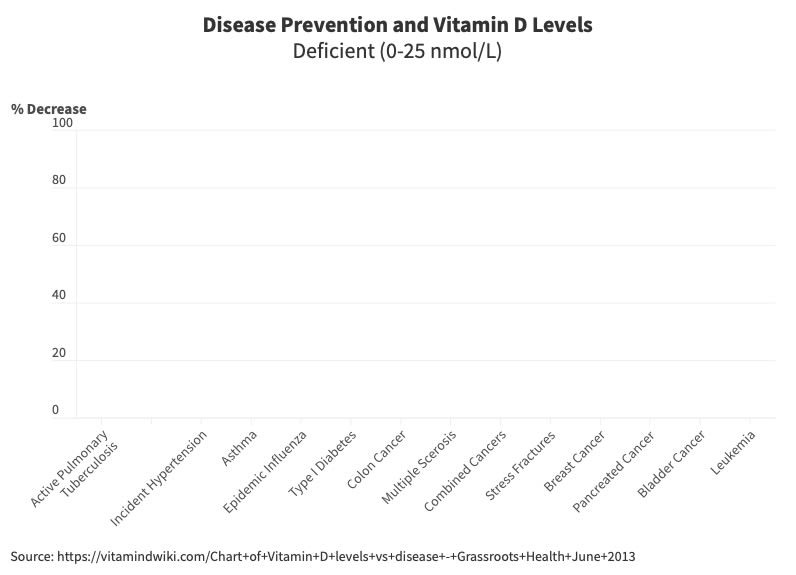
Deficient Levels of Vitamin D
Deficient Levels of Vitamin D
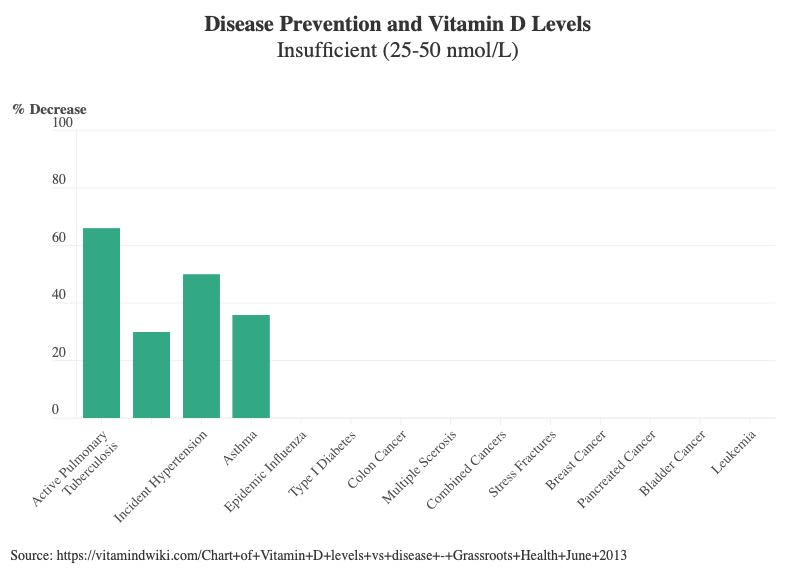
Insufficient Levels of Vitamin D
Insufficient Levels of Vitamin D
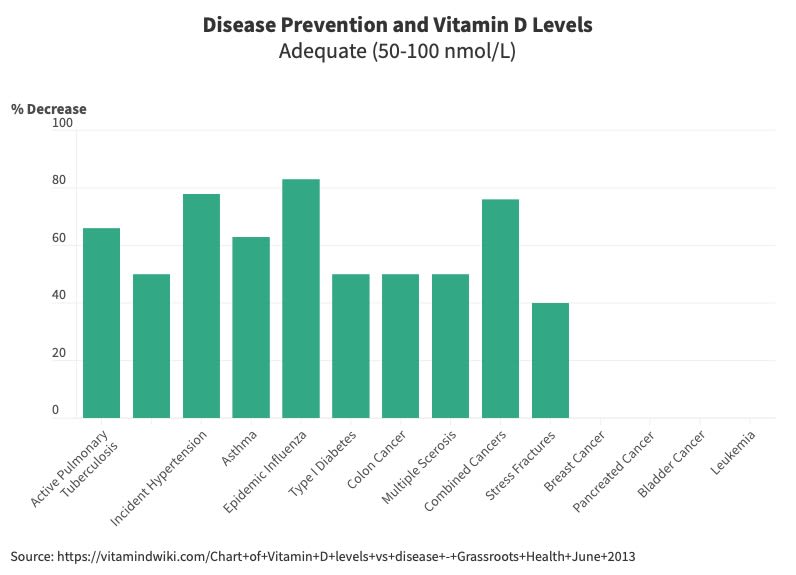
Adequate Levels of Vitamin D
Adequate Levels of Vitamin D
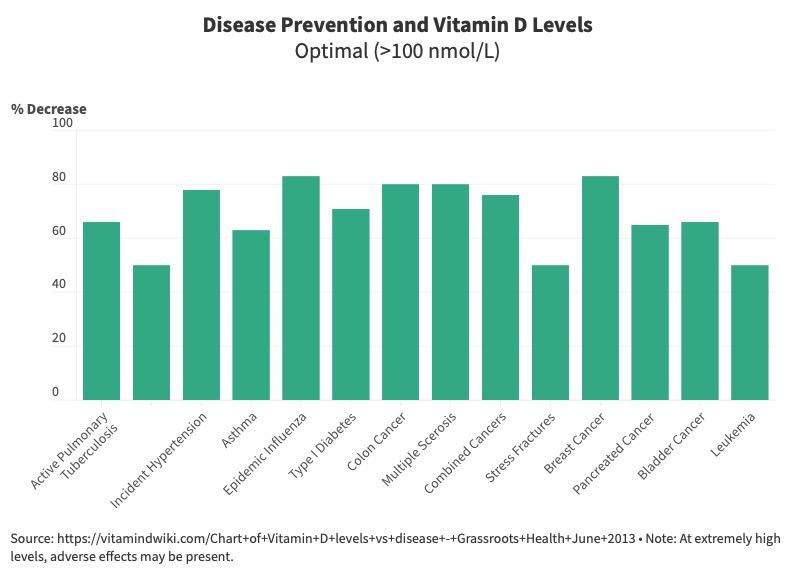
Optimal Levels of Vitamin D
Optimal Levels of Vitamin D
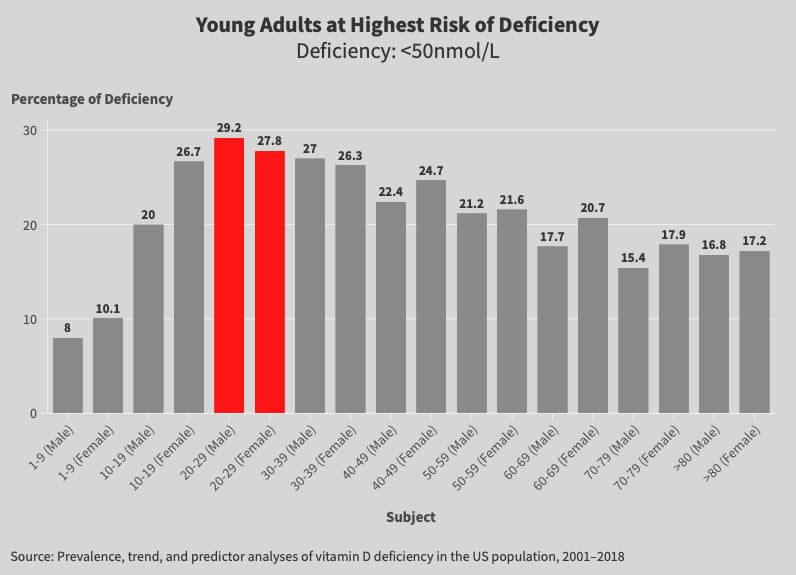
From 2001-2018, in a study of over 71,000 Americans...
28% of adults between the age of 20-29 were Vitamin D deficient*.
*Source: Prevalence, trend, and predictor analyses of vitamin D deficiency in the US population, 2001–2018

Sources of Vitamin D

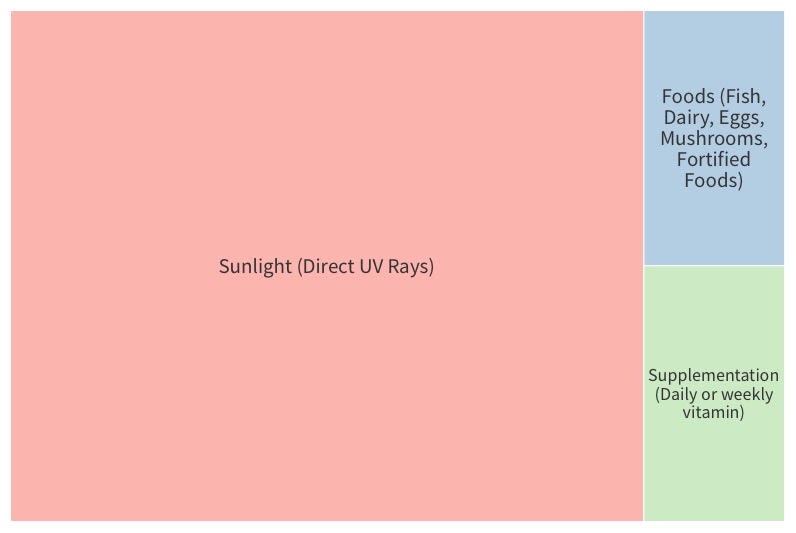
Up to 90% of Vitamin D is synthesized from direct sunlight, the rest comes from food*
Supplementation is an easy alternative, consult a professional.
* Source: https://www.healthywa.wa.gov.au/Articles/U_Z/Vitamin-D
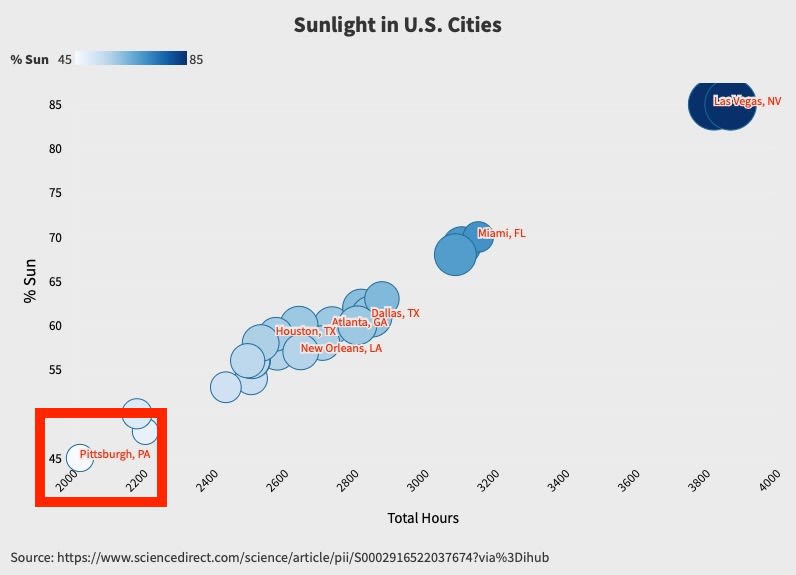
Pittsburgh might not get a lot of sun....
But it ranks among the best cities in the United States for outdoor enthusiasts

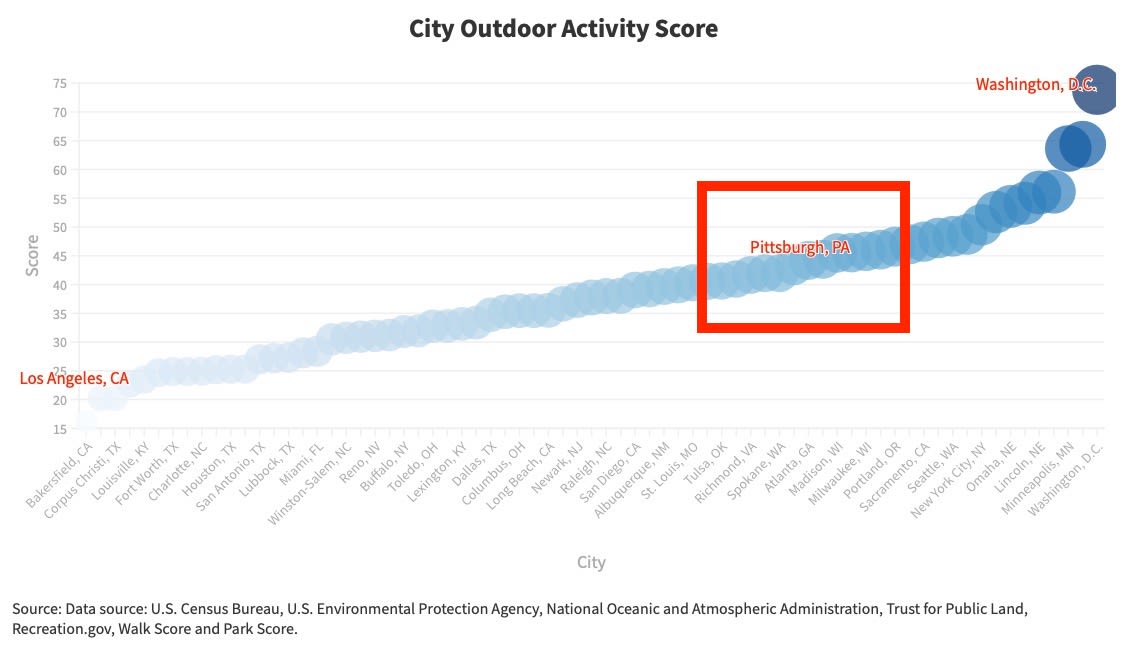




Enjoy the outdoors!
(The information presented on Vitamin D is not medical advice, consult a professional about health if necessary).
Things to Do Outside in Pittsburgh
More information on Vitamin D
Pittsburgh Parks Conservatory Non-Profit
 Built with Shorthand