
Congressional Stock Trading

In 2012, Congress passed the Stop Trading on Congressional Knowledge (STOCK) Act, which imposed specific requirements on Congress and their families who chose to trade stocks. This act was designed to combat insider trading following heavy volumes of trades made by members of Congress, which had led to reports of insider trading. In the 10+ years since this Act has passed, it has widely been considered a failed effort.
Following the outbreak of the Coronavirus in the United States in 2020, there were numerous accusations of insider trading by Members of Congress who sat in on closed meetings in which they learned about the virus's potential impact on the US. In the years since these public accusations and investigations, creators on TikTok have established platforms on the basis of tracking Congress members’ stock trades and highlighting certain trades that could potentially be conflicts of interest.
This trend has brought attention to many Members Congress and their spouses, compelling them to make statements regarding their trading habits. It has also made the information accessible to a largely new demographic of people who may not keep up with news headlines. This has kept the conversation revolving around conflicts of interest regarding Congress and trading in public companies, which has continued to be covered in the news.
Last year, the New York Times did an analysis on all trades within and found 97 members of Congress that have made potentially conflicting trades based on the committees that they are on. This article caused even more uproar and renewed discussions regarding the shortcomings of the STOCK Act. Conversation has resurfaced regarding whether Congress should be prohibited from trading stocks. As voters, it is important to be informed of the issue so that we can hold our elected officials accountable.
The STOCK Act

Basic Requirements:
- Members of Congress and their immediate families must disclose their financial transactions within 45 days.
- Disclosed information is to be made available to the public.
- Explicitly bans members of Congress from using non-public information obtained through their official duties for personal financial gain.
- Requires government officials to report any securities-related tips they receive as a result of their position.
- Imposes civil penalties for non-compliance and higher penalties for intentional violations.
Are the rules followed?
The simplest rule that applies to Congress members who engage in any type of financial transaction is to report trades within 45 days.
18% of all stocks trades by the current Congress are reported outside the 45-day window.
The penalties they are supposed to incur include a $200 fine for the first-time offense and additional fines for subsequent offenses. However, even though this requirement has been violated thousands of times, there is no public record that anyone who has violated this portion of the STOCK Act has faced any type of penalty.
Stock Trades by Current Members of Congress


A common way to easily classify a Congress Member's trade as a "questionable" through the Committees that they sit on. By looking at the jurisdictions for the 47 committees between the Senate and the House, we are able to relate each committee to a set of Industries that are directly affected by their jurisdiction.
There are 146 defined industries across 11 Sectors of the stock market. Each industry has between 10 and 80 companies in it. By relating the lists of Committees to industries, we are able to flag trades which should be observed further. Because these industries are only defined for US stock exchanges (NYSE and NASDAQ), we observe only US-trades.
The terms "questionable" and "potential conflict of interest" mean trades which could be considered a conflict of interest based on the Committees that the Representative is assigned. Without access to each Committee's meeting minutes or full access to private conversations, we cannot determine whether any trade is actually "insider trading." Thus, the intention is not to call out these Members of Congress, but call attention to the broken system in place.
129 current Congress members have reported trades upwards of $1,000.
This amounted to 14,214 trades within the past 4 years by members of the current Congress. Through a conservative analysis, 1,697 of these trades are flagged as "questionable," meaning the Congress Person who traded that stock is currently on a Committee whose jurisdiction directly affects the industry that this company is in.
It should be noted, that by flagging trades based on Committee assignment, is does leave out some analysis as there are members, like Nancy Pelosi and Kevin McCarthy, who do not sit on any Committees but still have access to a lot of information as the ranking person in their respective house.
Of 535 members of Congress, nearly a quarter of them have reported trades over $1,000 in value. Of those 129 members, 58 of them have made trades that are potential conflicts of interest due to the Committees they are a part of.
An analysis done by Unusual Whales has shown that Congress consistently outperforms the market. The SPY stock is considered a good representation of performance of the market, as it has a mix of all company types. If the same amount of money had been invested in the SPY stock as compared to the other stocks that members of Congress were buying in 2022, Congress significantly outperformed the market.
How many current representatives are trading?
Congress Consistently Outperforms the Market
Investigating Insider Trading


" Insider trading is an extraordinarily difficult crime to prove. The underlying act of buying or selling securities is, of course, perfectly legal activity. It is only what is in the mind of the trader that can make this legal activity a prohibited act of insider trading.
... Unless the insider trader confesses his knowledge in some admissible form, evidence is almost entirely circumstantial. "
- Thomas C. Newkirk, Associate Director, Division of Enforcement, SEC

In fact, in the 11 years since the STOCK Act has been passed, only one sitting Member of Congress has been charged and convicted for insider trading.
The prosecution of former New York Representative Chris Collins was only successful following his admission of guilt.
He was later fully pardoned by President Trump and has recently announced his intentions to run for Congress again as a Representative in Florida.
What is being done to stop this?

Ban Congressional Stock Trading Act
There have been three separate bills proposed to ban stock trading by members of Congress within the past year, two of which have been shut down. The latest one was introduced in late July and it is uncertain whether it will make it to the floor for debate or voting. This bill would require Congress Members, their spouses, and their dependent children to place their stocks into a blind trust or not trade altogether. Amid record low trust in the American government it is important that we increase our faith in our representatives.
Polls have consistently shown a majority of Americans support banning Congress stock trading altogether, with the most recent polls placing the support at 86% of the US population supporting this. So if so many people support it, why is getting shut down? The short answer Congress are the ones voting on whether Congress can trade.
However, Members of Congress are beholden to their constituents, so you DO have a say!
Call your Congress Person!

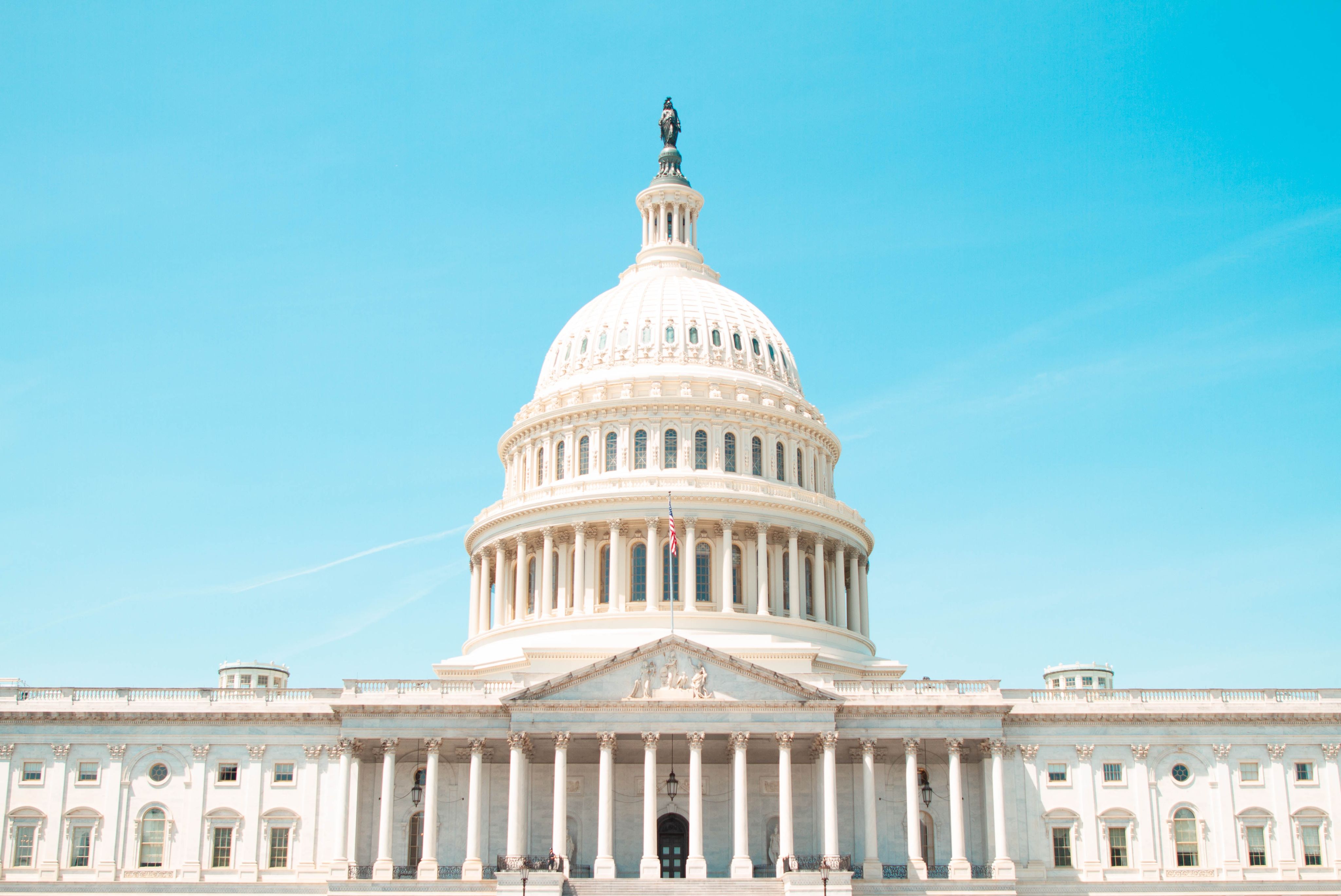

Tell them how much you support this bill
You can call your Member of Congress at their Capitol Hill Office and speak to a member of their staff.
The first step is to identify your representative in the House of Representatives or the Senate.
When you call them:
Identify Yourself and Ask For a Legislative Assistant
"Hi my name is __ and I am calling as a constituent."
State Your Purpose
"It is very important to me that the Ban Congressional Stock Trading Act be passed."
Establish Why the Issue is Necessary From Your Perspective
"As a citizen, I want to know that my elected officials are not acting on privileged knowledge to increase their own financial gains. As we have seen in the recent past, insider trading is a very hard crime to prove, but that does not mean that it is not happening. I believe that banning Members of Congress from trading stocks is the first step to ensuring insider trading laws are not violated by our elected officials and increasing faith in our government."
Ask Your Member of Congress to Take Action
"I urge the SENATOR/REPRESENTATIVE to vote YES to pass the Ban Congressional Stock Trading Act."
Thank the Staffer
"Thank you for your time and attention today."
This script was derived from the script by the American Psychological Association.
Sources for COVID Insider Trading timeline:
Senate Committee on Health, Education, Labor, and Pensions. "Senate Health Committee Announces Briefing to Update Senators on Coronavirus." Senate.gov. 23 Jan 2020. https://www.help.senate.gov/chair/newsroom/press/senate-health-committee-announces-briefing-to-update-senators-on-coronavirus
Sonam, Sheth. "Sen. David Perdue bought stock in a company that produces protective medical equipment the same day senators received a classified briefing on the coronavirus." Business Insider. 6 Apr. 2020. https://www.businessinsider.com/coronavirus-david-perdue-bought-stock-company-producing-ppe-after-briefing-2020-4.
Mitchell, Tia. "David Perdue’s stock trading saw an uptick as coronavirus took hold." The Atlanta Journal-Constitution. 6 Apr. 2020. https://www.ajc.com/news/state--regional-govt--politics/david-perdue-stock-trading-saw-uptick-coronavirus-took-hold/MRWmzwXeHgxi6IcmBbPgaN/.
Shortell, Perez, Herb, Scannell. "Exclusive: Justice Department reviews stock trades by lawmakers after coronavirus briefings." CNN. 30 Apr 2020. https://www.cnn.com/2020/03/29/politics/justice-stock-trades-lawmakers-coronavirus/index.html.
Faturechi, Willis. "Senator Dumped Up to $1.7 Million of Stock After Reassuring Public About Coronavirus Preparedness." ProPublica. 19 Mar. 2020. https://www.propublica.org/article/senator-dumped-up-to-1-7-million-of-stock-after-reassuring-public-about-coronavirus-preparedness/amp.
 Built with Shorthand