
Coffee: A Filtered Perception
peek into farmer's earnings in the coffee business









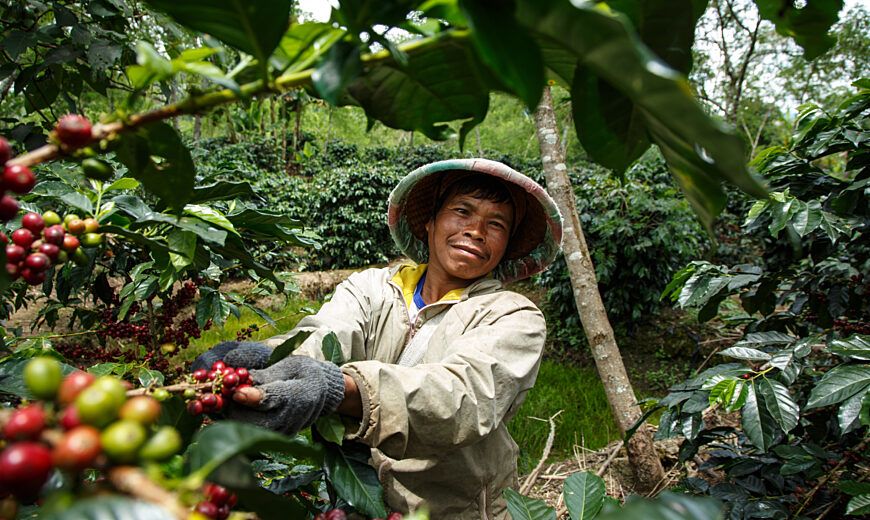
Picture by Bruno Emmanuelle on unsplash.com
Picture by Bruno Emmanuelle on unsplash.com
Picture by Alexander Gilberts on unsplash.com
Picture by Alexander Gilberts on unsplash.com

Picture by Annemarie Gruden on unsplash.com
Picture by Annemarie Gruden on unsplash.com
Over 1 billion people all over the world drink coffee daily.


The average American spends about $1,097 on coffee each year


Coffee Farming must be a profitable business !
But the reality is a lot different


Americans will consume 11,947,500 pounds of coffee per year but,
Farmers make only $ 0.60 per pound of coffee
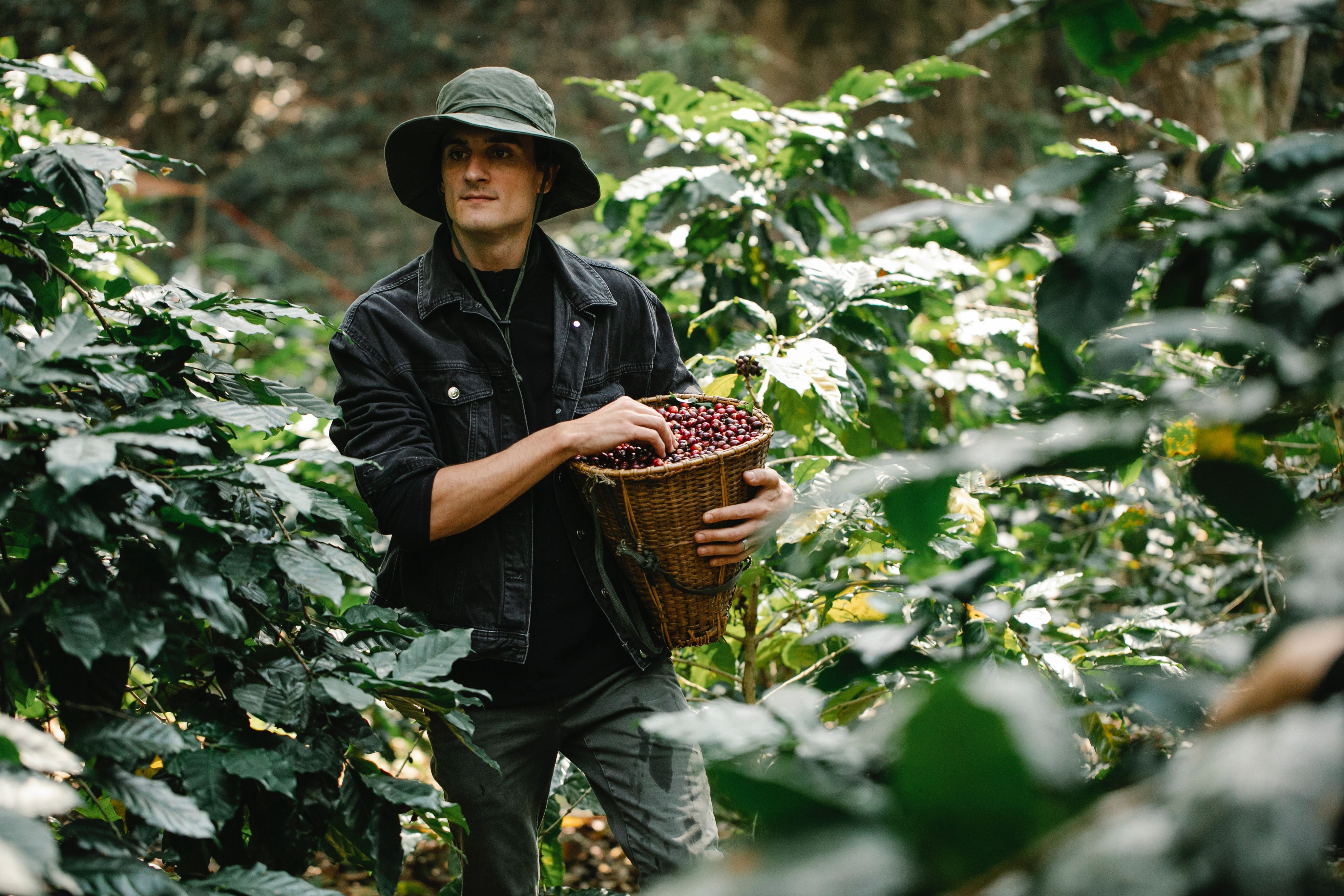
Lila's family had a coffee farm in India for generations. She and her family work hard around the clock for planting and grow coffee plants. She gets $57 as a result of the coffee she grew. The main issue is she spent $63 to grow the coffee itself.
Farmer Lily is losing money for every cup of the coffee

Why Coffee farmers are poor?
Geography: Coffee-growing tropical countries are underdeveloped
The weather conditions that are favorable for the coffee business are barriers to economic development.
Coffee is a tropical plant and tropical underdevelopment is a wider-scale problem. The main reason for tropical underdevelopment is lack of production technology in agriculture and health.
Thus, GDP per capita for temperate countries is 3-5 times higher than coffee producing countries.
As seen in the below visualizations, the coffee-origin countries with the highest production have income per capita lower than other temperate countries. This inadvertently puts coffee farmers near poverty line due to lower currency rates.

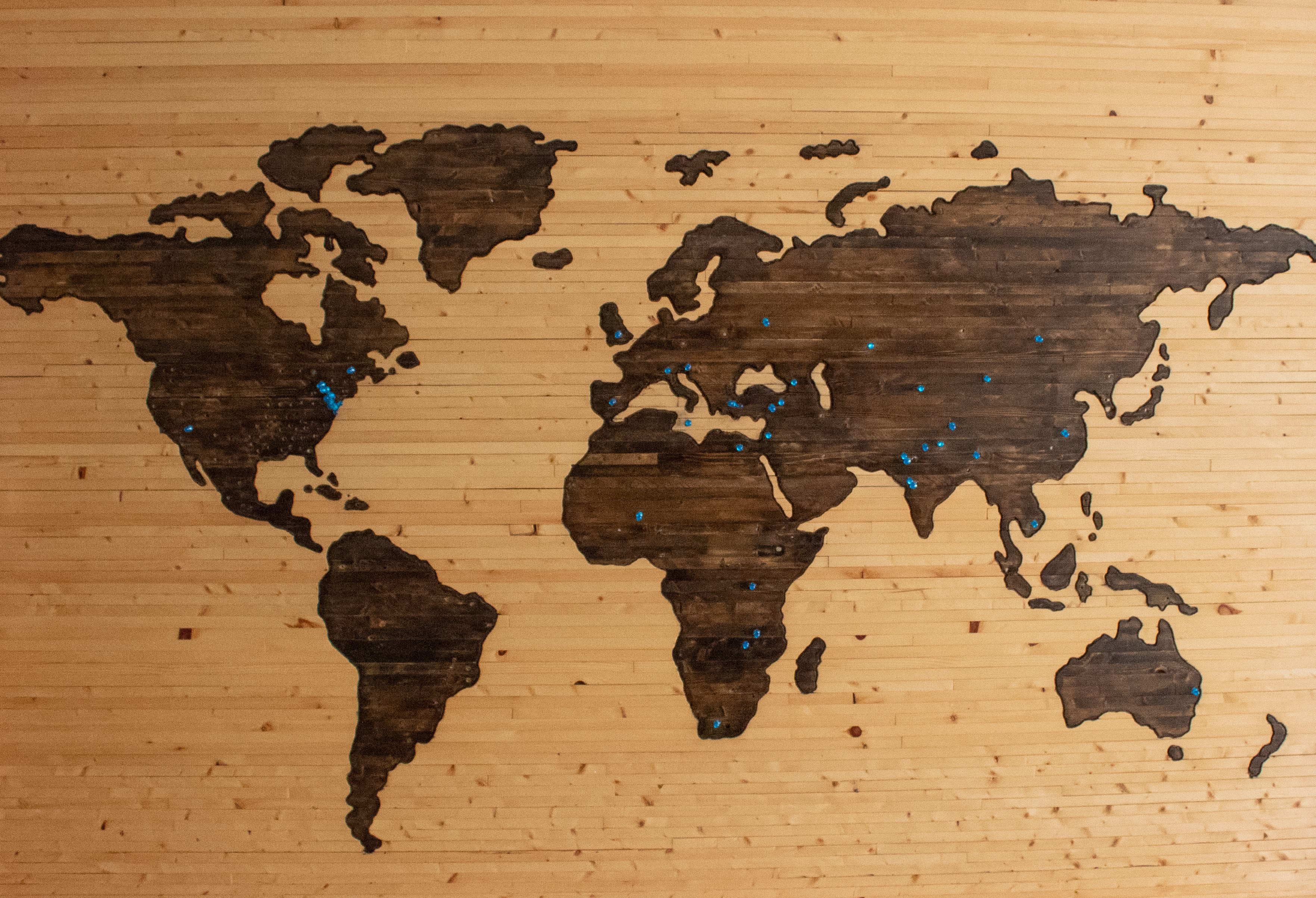
Coffee Production - Tropical Countries Income

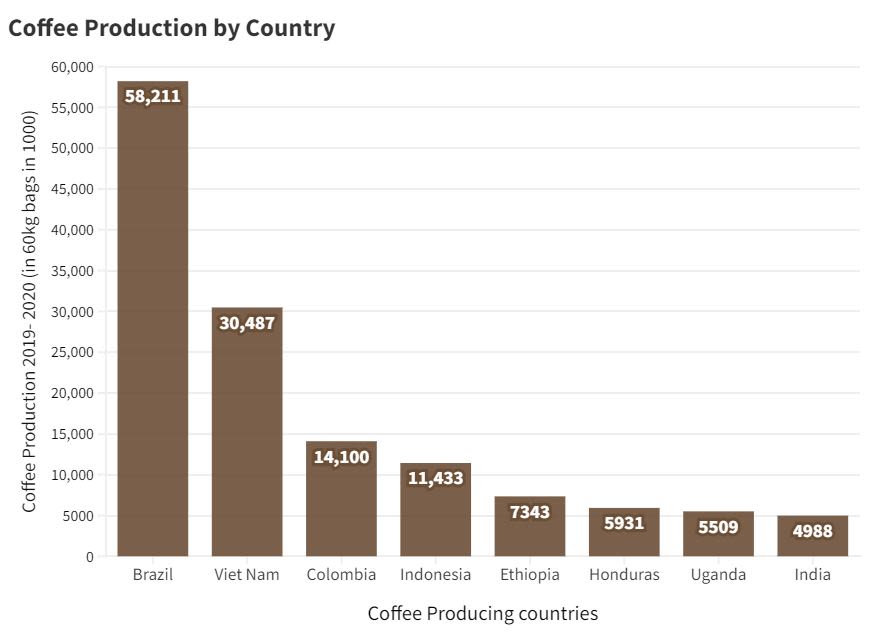
Coffee Production by Country
As seen from the graph, due to weather conditions required for coffee plantations the highest production is from tropical countries.

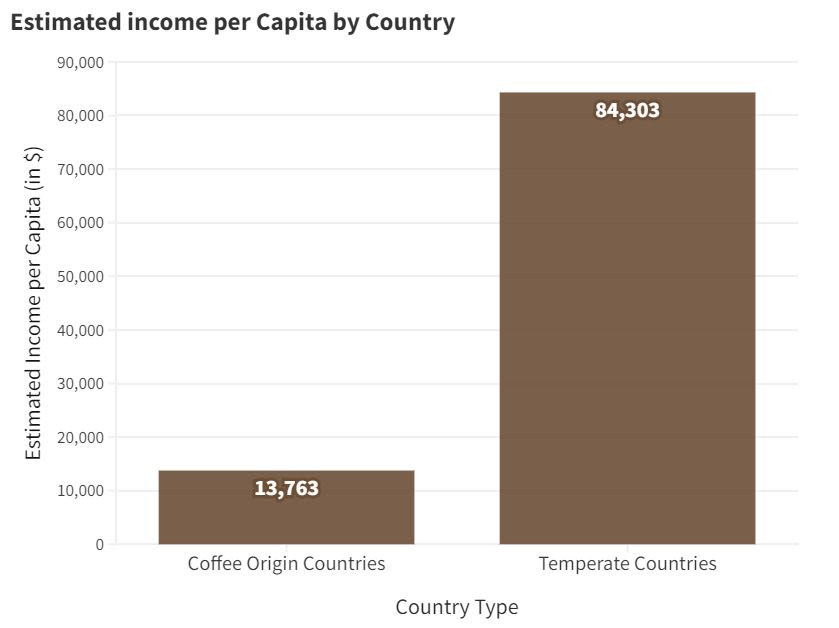
Estimated Income per Capita by Country
As tropical countries are underdeveloped due to a lack of technological development in weather and healthy, the average income for coffee-origin countries is lower than temperate (coffee consumer countries)
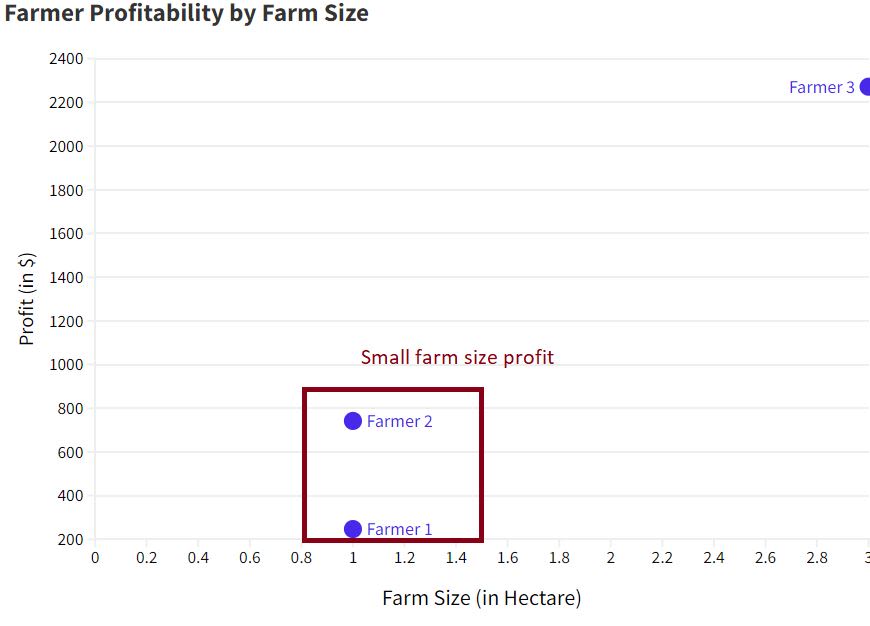
Small Farm Size : Less Productivity
According to the international coffee organization, 80% of coffee farmers are small farm holders.
This put the majority of farmers in low-productivity regions.
As shown in charts , let's consider Farmer1 who has a small land of 1 hectare with low productivity and has a very low profit at the end of the reason $247 per year.
Farmer2 with the same land size with more yield still makes $742 per year.
However, farmer3 with a size of around 3 hectares had large productivity of $ 2272 per year.



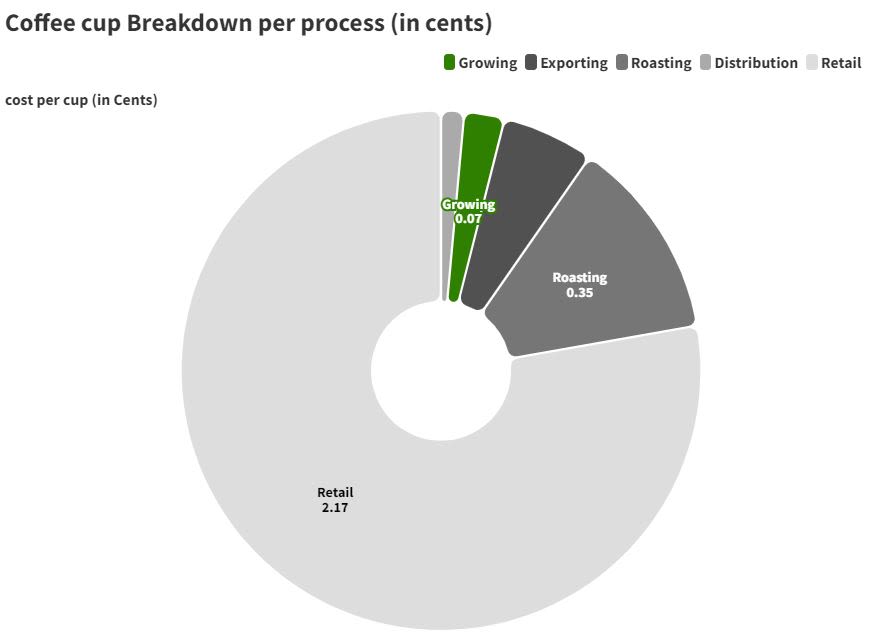
Coffee Supply Chain - Middlemen costs
The coffee business has 2-6 middlemen till it reaches the consumer. These steps involve -
- Growing
- Roasting
- Exporting
- Distribution
- Retail

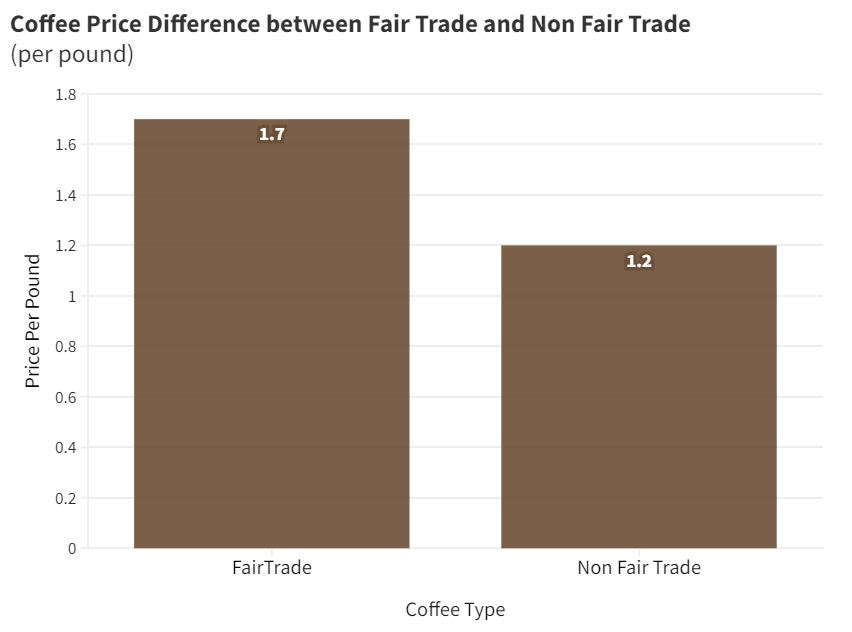
How can we ensure fair prices for farmers?


CHOOSE FAIRTRADE
It is the only global sustainability label that guarantees a minimum price for coffee.



logo from fairtrade official website
logo from fairtrade official website
Fairtrade gives money to farmers and creates a unique pricing model. It also sets as well as monitors strict standards for each step in the supply chain.
It supports producers through regionals expert networks and also creates demands in countries like US.s.
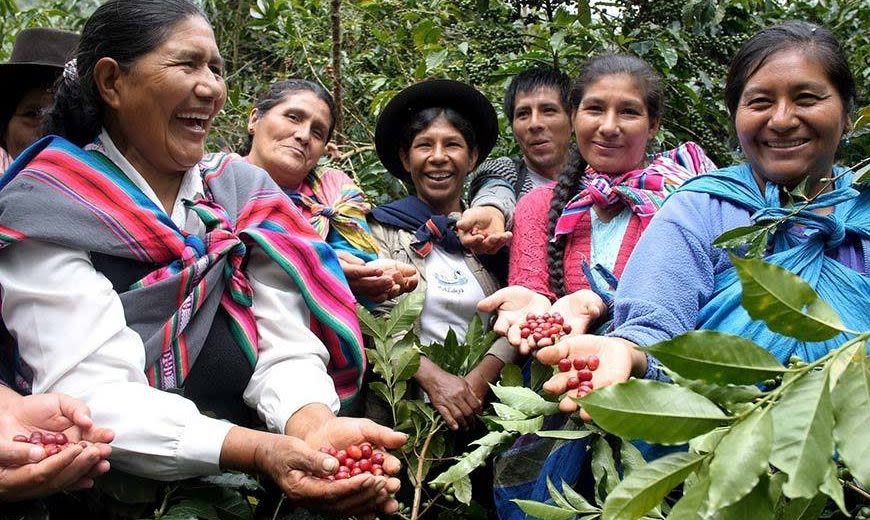
“As a woman, being involved with Fair Trade is very helpful. They transport the coffee by lorry so we don’t have to carry it on our backs. We understand the coffee business now and Fair Trade has taught us how to improve the quality of our coffee. It also helps women sell their coffee, we have a good market now. Fair Trade is also giving women freedom of speech.”
- Esther Mwanyama , Kenya

As a Consumer ,
Buy your everyday coffee from fairtrade and sustainable brands.


FairTrade Coffee Brands


Logo from Marley Coffee official website
Logo from Marley Coffee official website
Marley Coffee
It is a sustainable coffee which is committed to give back to mother earth.
It uses fairtrade coffee beans and eco cups which are recyclable after use.
Can be bought on Amazon USA and marleycofffee website


Logo from ethical bean coffee official website
Logo from ethical bean coffee official website
Ethical Bean
It has 100 % Fairtrade and organic coffee style from day 1.
It also allows 100 % traceability of coffee through a QR code.
Can be bought on Amazon USA and ethical bean website

Logo from Van Houtte offical website
Logo from Van Houtte offical website
Van Houtte
It offers coffee products, services and cafe.
With 'Drink Bigger' initiative, it engages coffee community and the sustainable practices at each step of the supply chain.
Can be bought on Amazon USA and Van Houtte website

References / Citations :
1. “11 Coffee Drinking Statistics You Should Know & What It Means for You.” Joe's Garage Coffee, August 29, 2022. https://joesgaragecoffee.com/blog/coffee-drinking-statistics/.
2.“The Farmer Who Grew Your Coffee Is Losing Money on Every Cup.” Root Capital, October 28, 2021. https://rootcapital.org/the-f3.armer-who-grew-your-coffee-is-losing-money-on-every-cup/.
3.“Historical Data on the Global Coffee Trade.” International Coffee Organization - Historical Data on the Global Coffee Trade. Accessed October 8, 2022. https://www.ico.org/new_historical.asp.
4.Wallach, Omri. “From Bean to Brew: The Coffee Supply Chain.” Visual Capitalist, August 11, 2020. https://www.visualcapitalist.com/from-bean-to-brew-the-coffee-supply-chain/.
5.“Testimonials of Fair Trade Producers.” fairtrade, January 23, 2019. https://fairtrade-advocacy.org/testimonials-of-fair-trade-producers/.
6.Stritzinger, Kate. “We Love Coffee. Are We Willing to Pay the Price?” Fairtrade America, August 28, 2020. https://www.fairtradeamerica.org/news-insights/we-love-coffee-are-we-willing-to-pay-the-price/.
7.“Rich Farmer, Poor Farmer.” caravela, May 20, 2021. https://caravela.coffee/project/rich-farmer-poor-farmer/.
8.“How Fairtrade Works.” Fairtrade America, November 13, 2020. https://www.fairtradeamerica.org/why-fairtrade/the-fairtrade-difference/for-shoppers/how-fairtrade-works/#:~:text=How%20does%20Fairtrade%20work%3F,in%20countries%20like%20the%20US.
9. Delany, Ryan. “Why Coffee Farmers Are Poor.” CoffeeTradingAcademy. CoffeeTradingAcademy, January 15, 2022. https://www.coffeetradingacademy.com/post/why-coffee-farmers-are-poor.
 Built with Shorthand