
Adoption in the U.S.
Breaking down the statistics
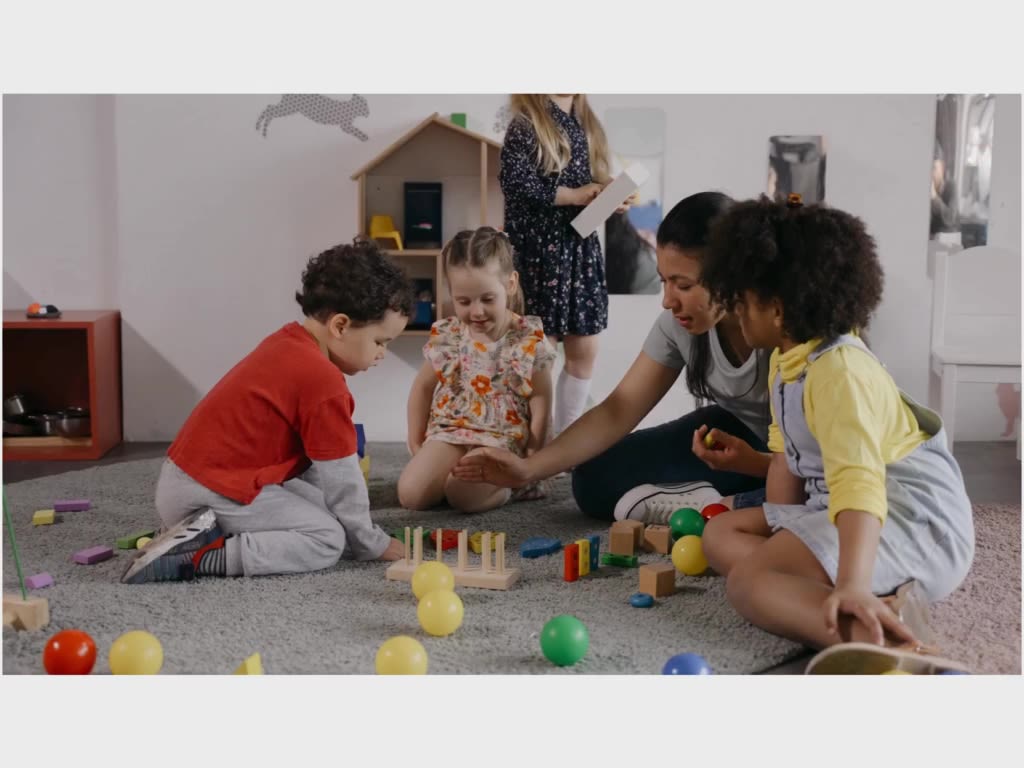


Adopting a foster child can take 6 to 18 months. Adopting a newborn can take 2 to 7 years. (National adoption Center)
This year, nearly 2 in 5 adults (37%) say they have considered adoption, up significantly from just one-quarter (25%) in 2017 and the highest proportion of adults to be considering adoption since the inception of the study in 2007. (Dave Thomas Foundation)
Similar to prior waves, majorities prefer a child 5 or younger (60%) and very few (3%) prefer to adopt a teenager (13+). (Dave Thomas Foundation)
Adoption statistics


source: “Trends in Foster Care and Adoption: FY 2012 – 2021.” Children's Bureau. https://www.acf.hhs.gov/cb/report/trends-foster-care-adoption.
source: “Trends in Foster Care and Adoption: FY 2012 – 2021.” Children's Bureau. https://www.acf.hhs.gov/cb/report/trends-foster-care-adoption.
source: “Trends in Foster Care and Adoption: FY 2012 – 2021.” Children's Bureau. https://www.acf.hhs.gov/cb/report/trends-foster-care-adoption.
source: “Trends in Foster Care and Adoption: FY 2012 – 2021.” Children's Bureau. https://www.acf.hhs.gov/cb/report/trends-foster-care-adoption.
source: “Trends in Foster Care and Adoption: FY 2012 – 2021.” Children's Bureau. https://www.acf.hhs.gov/cb/report/trends-foster-care-adoption.
source: “Trends in Foster Care and Adoption: FY 2012 – 2021.” Children's Bureau. https://www.acf.hhs.gov/cb/report/trends-foster-care-adoption.
source: “Trends in Foster Care and Adoption: FY 2012 – 2021.” Children's Bureau. https://www.acf.hhs.gov/cb/report/trends-foster-care-adoption.
source: “Trends in Foster Care and Adoption: FY 2012 – 2021.” Children's Bureau. https://www.acf.hhs.gov/cb/report/trends-foster-care-adoption.
source: “Trends in Foster Care and Adoption: FY 2012 – 2021.” Children's Bureau. https://www.acf.hhs.gov/cb/report/trends-foster-care-adoption.
source: “Trends in Foster Care and Adoption: FY 2012 – 2021.” Children's Bureau. https://www.acf.hhs.gov/cb/report/trends-foster-care-adoption.
source: “Trends in Foster Care and Adoption: FY 2012 – 2021.” Children's Bureau. https://www.acf.hhs.gov/cb/report/trends-foster-care-adoption.
source: “Trends in Foster Care and Adoption: FY 2012 – 2021.” Children's Bureau. https://www.acf.hhs.gov/cb/report/trends-foster-care-adoption.
source: “Trends in Foster Care and Adoption: FY 2012 – 2021.” Children's Bureau. https://www.acf.hhs.gov/cb/report/trends-foster-care-adoption.
source: “Trends in Foster Care and Adoption: FY 2012 – 2021.” Children's Bureau. https://www.acf.hhs.gov/cb/report/trends-foster-care-adoption.
in 2021...
1 in 200 children were in Fostercare
1 in 135,000 Children were adopted
1 in 650 children were waiting to be adopted
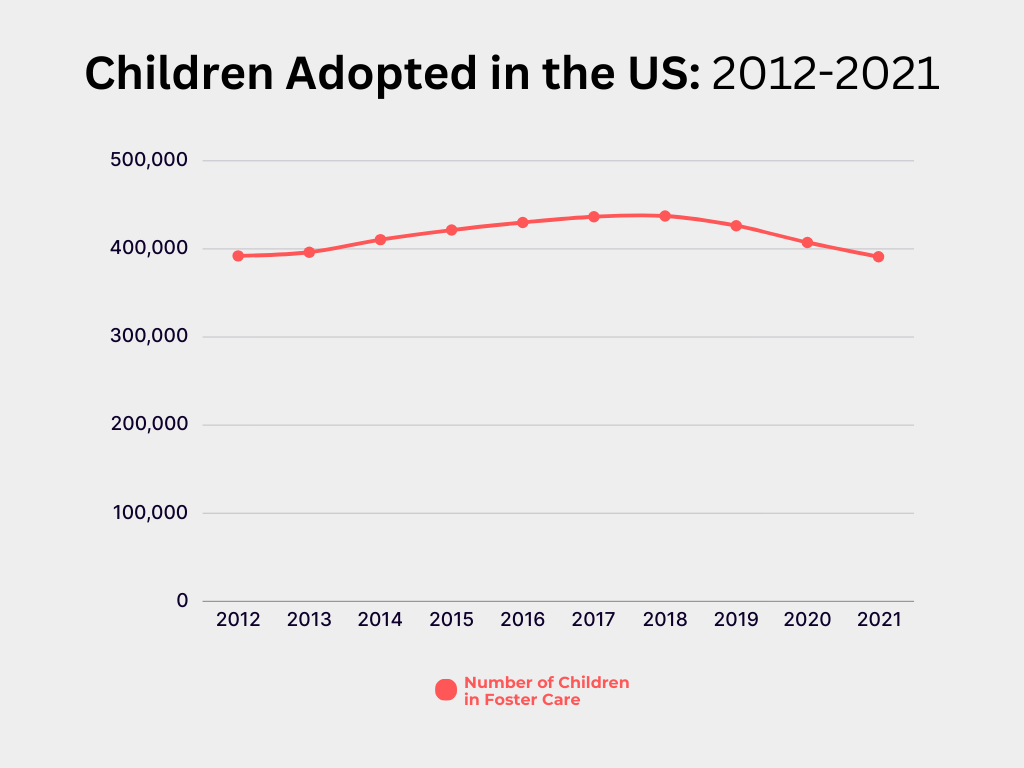
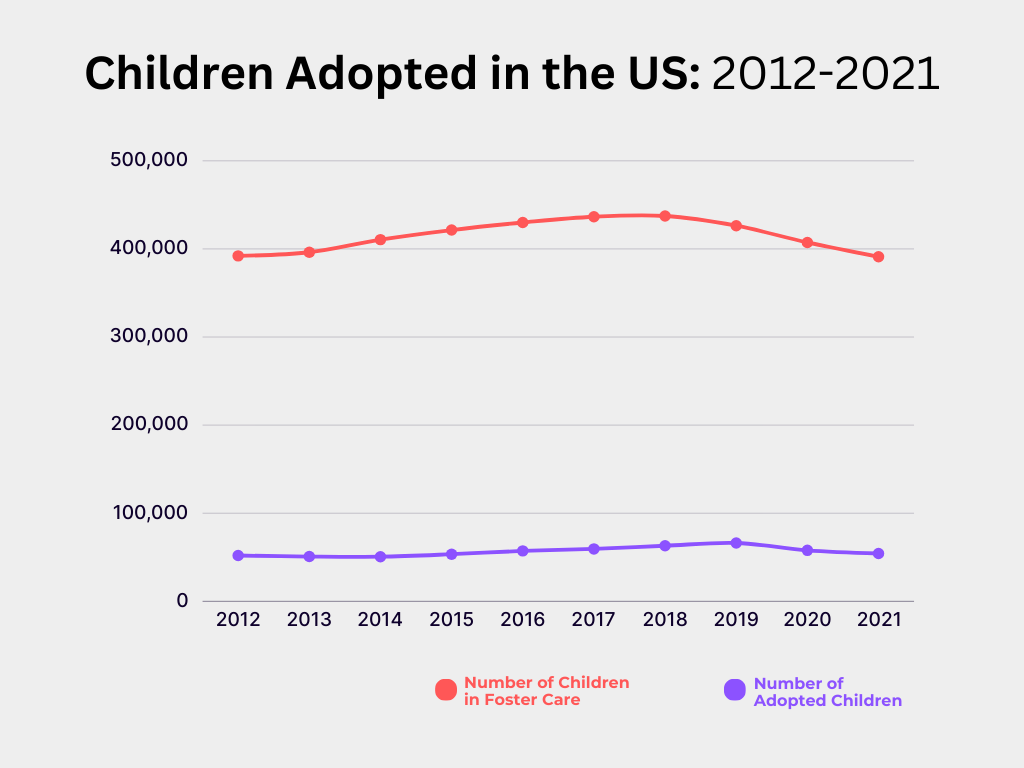
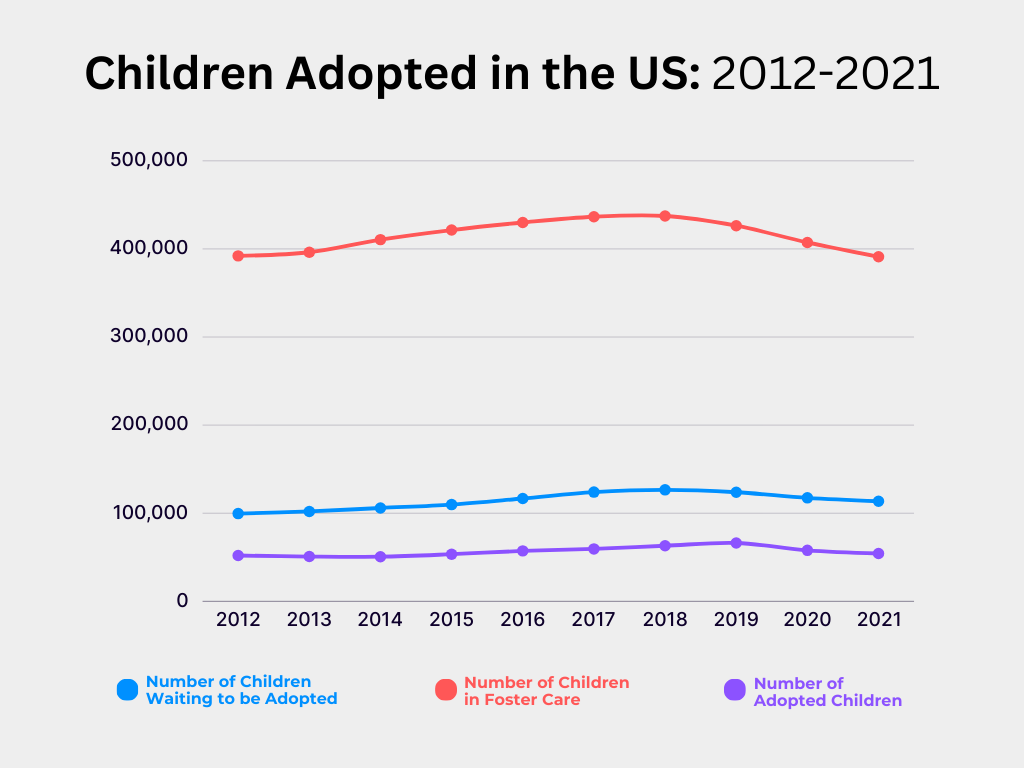
Looking at recent data, about 54,000 children were adopted in 2021 leaving 113,589 still in the foster care system waiting to be adopted. Here is a quick visualization showing the overall trend in adoption from 2012 to 2021. We see a steady increase, peaking in 2019, then trending down most likely due to covid 19 reasons. (Children's Bureau)
Adoption Rates per State
California has the highest rate of adoption from 2017-2021 following Texas, Florida, and Arizona. Wyoming had the lowest rate of all states.

Adoption demographics:
ethnicity

Federal laws:
33 major federal laws from 1974 to 2019 are in place for adoption.
|
(Children's Bureau, Child Welfare Information Gateway) |
|
|---|---|
|
Substance Use-Disorder Prevention that Promotes Opioid Recovery and Treatment for Patients and Communities Act or the SUPPORT for Patients and Communities Act |
Promoting Safe and Stable Families Amendments of 2001 |
Looking back 20 years from 2021, we see a significant decrease in Black children being adopted, and an increase in adoption for White, Hispanic, and children from Two or more races, represented in the chart on the left.
Also looking back 20+ years from 2021, congress enacted the Interethnic Provisions of 1996 and The Multiethnic Placement Act of 1994 in hopes of “decreasing the length of time that children wait to be adopted and eliminate discrimination on the basis of the race, color, or national origin of the child or the prospective foster or adoptive parent” (Children's Bureau)
There is still work to be done to provide equitable opportunities for adopted children and children waiting to be adopted.


https://www.flickr.com/photos/bcgovphotos/30392772140
https://www.flickr.com/photos/bcgovphotos/30392772140
Proportions total :
Adopted vs. Total Children in the US

The bar graph shows the rate at which the children population is changing in the US and the blue line represents the adopted children’s rate of change. The chart below represents the change in population proportion between adopted children and children overall in more detail.






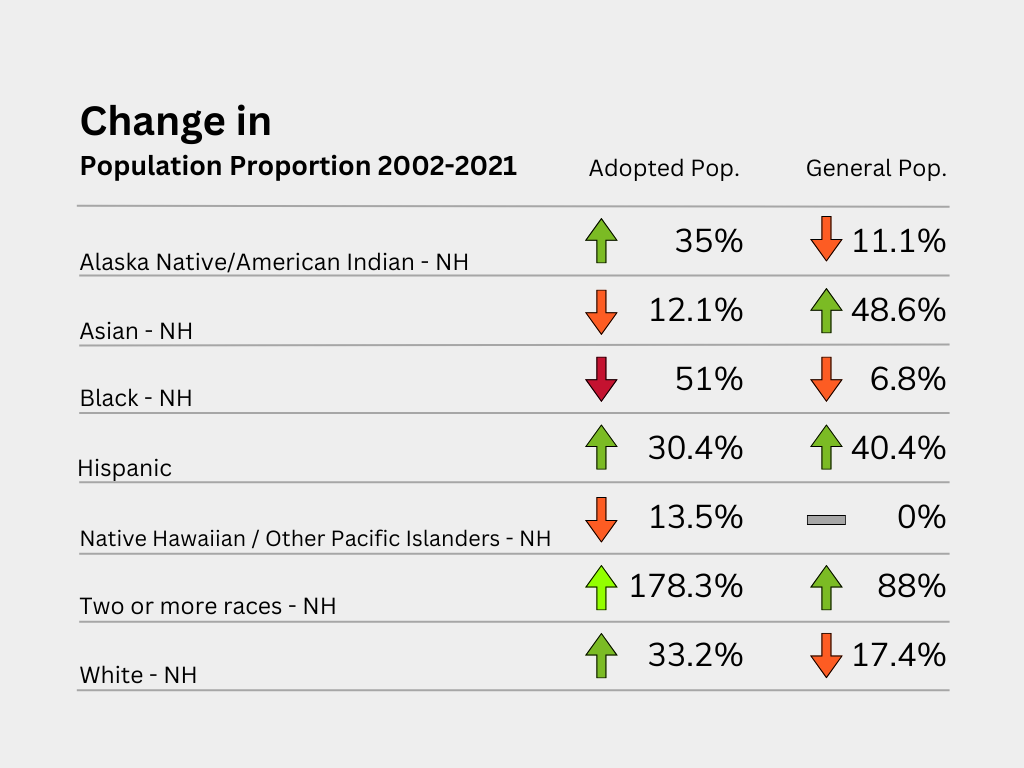
Today, statistics show positive results from these acts however, there are still several articles and studies presenting the necessity to continue developing these policies. In the coming years, we want to see an increase in the number of black children being adopted and for these rates to converge as our country approaches a minority-majority population.
When comparing the adopted and general population of children in the US, there is an overall increase in Hispanic children and children of two or more races. There is a decrease in the adoption population for Asian, Black, and Native Hawaiian/other Pacific islander children.


Call to Action
Whether considering adopting or fostering, supporting policies promoting equitable opportunities such as the Multiethnic Placement Act, or just further educating yourself and each other can help shape a more inclusive future for children in the US. Check out these articles and resources to dive deeper into issues within the foster care and adoption system in the US today.
Resources are meant for the general public, policymakers, adoption agencies, researchers, prospective adoptive parents, support organizations advocating for children's rights and adoption, or any audience members who want to learn more about culture and have the resources to guide and help.

View more by GDJ from pixabay
View more by GDJ from pixabay
To learn more... below are some resources that you can to further learn about the US adoption and foster care system!
Resources
“Adoption,” Children’s Bureau. June 16, 2023. https://www.acf.hhs.gov/cb/focus-areas/adoption.
"Adoption Statistics.” U.S. Department of State. Accessed December 7, 2023. https://travel.state.gov/content/travel/en/Intercountry-Adoption/adopt_ref/adoption-statistics-esri.html?wcmmode=disabled.
Bureau, US Census. “General Demographic Characteristics by Race for the United States: 2000.” Census.gov. Accessed December 7, 2023. https://www.census.gov/data/tables/2000/dec/phc-t-15.html.
“Childstats.Gov - America’s Children: Key National Indicators of Well-Being, 2023 - Demographic Background.” Accessed December 7, 2023. https://www.childstats.gov/americaschildren/demo.asp.
“Index of /Programs-Surveys/Popest/Tables/2020-2022/National/Asrh.” Accessed December 7, 2023. https://www2.census.gov/programs-surveys/popest/tables/2020-2022/national/asrh/.
Institute for Family Studies. “An Update on the Changing Face of Adoption.” Accessed December 7, 2023. https://ifstudies.org/blog/an-update-on-the-changing-face-of-adoption.
Kalisher, Allon, Jennah Gosciak, and Jill Spielfogel. “The Multiethnic Placement Act 25 Years Later:,” n.d.
“Major Federal Legislation Concerned With Child Protection, Child Welfare, and Adoption.” Child Welfare, n.d.
“POP3 Race and Hispanic Origin Composition: Percentage of U.S. Children Ages 0–17 by Race and Hispanic Origin, 1980–2022 and Projected 2023–2050.” Accessed December 7, 2023. https://www.childstats.gov/americaschildren/tables/pop3.asp.
Statista. “Foster Care in the U.S. - Number of Children, by Race/Ethnicity 2021.” Accessed December 7, 2023. https://www.statista.com/statistics/255404/number-of-children-in-foster-care-in-the-united-states-by-race-ethnicity/.
“Transracial Adoption.”Child Welfare. Accessed December 7, 2023. https://www.childwelfare.gov/news-events/adoptiontriad/editions/mar2019/.
“Transracial Adoption from Foster Care in the U.S.,” 2020.
“Trends in Foster Care and Adoption: FY 2012 – 2021.” Accessed December 7, 2023. https://www.acf.hhs.gov/cb/report/trends-foster-care-adoption.
“Trends in Foster Care and Adoption: FY 2012 – 2021.” Accessed December 7, 2023. https://www.acf.hhs.gov/cb/report/trends-foster-care-adoption.
University of Nevada, Reno. “Transracial Adoption: Statistics and Social Challenges,” July 7, 2022. https://onlinedegrees.unr.edu/blog/transracial-adoption-statistics/.
“American Adoptions - Adoption Requirements in the U.S.” Accessed December 7, 2023. https://www.americanadoptions.com/adopt/requirements_to_adopt.
“American Adoptions - Adoption Wait Times - How We Minimize The Wait Time.” Accessed December 7, 2023. https://www.americanadoptions.com/adopt/adoption_wait_times.
“American Adoptions - American Adoptions - America’s Adoption Agency.” Accessed December 7, 2023. https://www.americanadoptions.com/.
Columbia, Province of British. New Online Adoption Application Goes Live. October 31, 2016. Photo. https://www.flickr.com/photos/bcgovphotos/30392772140/.
“Free Images : Silhouette, Adoption, Diverse Family, Child, Mother Day, Female, Fun, Gift, Flower, Little, Love, Nature Parents, Park, People, Picnic, Together, Woman, Young, Black and White, Human Behavior, Joint, Male, Standing, Clip Art, Line, Communication, Graphics, Conversation, Monochrome Photography 2400x2400 - Mohamed Hassan - 1444843 - Free Stock Photos - PxHere.” Accessed December 7, 2023. https://pxhere.com/en/photo/1444843.
“Free Images : Silhouette, Adoption, Parents, Boy, Child, Dad, Mom, Family, Father, Female, Mother, Guardian, Kid, Male, Man, Vacation, Walking, Playing, Son, People, Standing, Black and White, Human Behavior, Joint, Monochrome Photography 2400x2400 - Mohamed Hassan - 1445573 - Free Stock Photos - PxHere.” Accessed December 7, 2023. https://pxhere.com/en/photo/1445573.
“Adopted List.” Accessed December 8, 2023. https://cwoutcomes.acf.hhs.gov/cwodatasite/adopted/index.
“United States Regions.” Accessed December 8, 2023. https://education.nationalgeographic.org/resource/united-states-regions/.
 Built with Shorthand